

How transactions based on excess brand equity yield diminishing returns by undermining the cultivation of individual creativity & what we may do.
In a 1929 interview with the Saturday Evening Post, Albert Einstein once asserted “imagination is more important than knowledge.” Through perhaps no one person’s fault, it has recently begun to look like a threat to our collective ability to imagine – or intuit – has been growing. But, because we are ready for the challenge, this may be a good thing.
Two aspects of the United States’ founding documents – the Declaration of Independence and Constitution – that seem to be talked about a lot, but perhaps not considered enough, are (1) the idea behind the Declaration’s most basic premise: that all men – and it is vital that we clarify this must mean all people – are created equal; and (2) that the Constitution is designed to function as a dynamic machine which, in the process of being built, amended, and maintained, should uphold the concept of human equality as the country evolves. I believe it might be useful to consider these elements a goal and a vehicle.
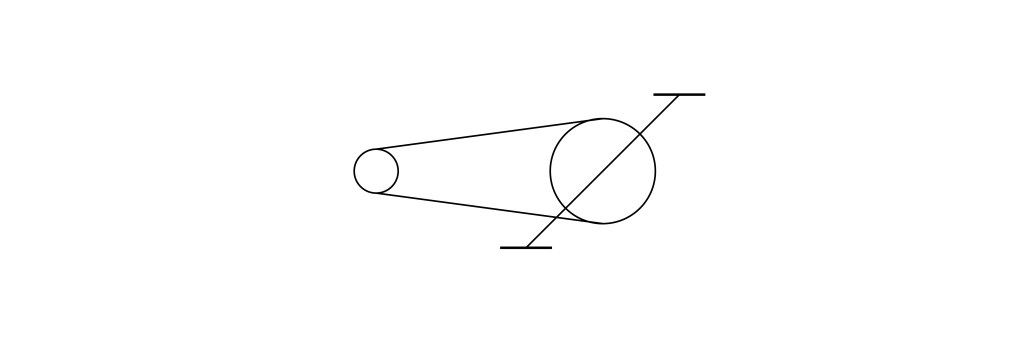
To the degree that we view the Constitution, in its highest purpose, as a blueprint designed to protect and advance the notion of individual human rights and the mechanisms and organizations through which this has historically been accomplished, it may be helpful to revisit this idea frequently in reviewing the effectiveness of political, educational, and even business policies. Like the leveraged rear axle of a bicycle, it’s the smallness of the unit of the individual that is arguably the key to making the whole system work.
We seem to be living in a pivotal time, insofar as dialogue has begun to focus more on the notion of dynamic systems – and mindsets – as being centrally important to both individual and collective evolution. (Carol Dweck’s research on “The Power of Yet” and the clear distinction drawn between what are termed fixed and growth mindsets is very inspirational.)
But, at the same time, there seems to be considerable and seemingly sudden resistance to the ideas of equal intrinsic human value as well as what Dweck termed “growth mindset” (which may make particular sense to people of faith). And this seems to have begun to cross a threshold.
Because of this, now is an important time to revisit the basics. Aren’t our current systems evolving in order to uphold the equal rights of all people? No. Why? It may be because of the limitations of proxies in general and the idea of corporate personhood in particular. Although many people have questioned the utility of this doctrine for decades, it might be helpful to review why it is of particular import now and what it may make sense to do.
On Lenses
Many years ago I began to experience painful headaches just about daily for several days in a row. I did everything I felt I knew to do to address the issue. I made sure I got enough sleep; I made sure I had enough water; I exercised. I had already been praying. But the problem persisted, and it felt for some reason like it had something to do with my eyes. So, I went to an eye doctor who, surprisingly, told me my lens prescription had gotten weaker and the ones I had been wearing were just too strong. Sure enough, once I got the weaker lenses the headaches went away immediately. (I should note that, several years later, my prescription went back to its earlier version, although I hope that does not undermine the strength of my point.)
I wonder whether we may be in a similar situation in our country as I was, in which the lenses, or brands, through which we look at our organizations and institutions are simply too strong. Our constitutional framework’s goal is to support the full expression of the human mind and heart. And many of our organizations have been brilliantly designed to do this. But, because we have begun to measure the degree to which these organizations’ goals are accomplished only by tangentially related proxies – namely, brand equity and stock market performance – we seem to have a situation in which the value of organizations is gauged based, at best, on averages, and, at worst, on appearances. (Certainly both of these possibilities are better than many of the alternatives, but I believe it makes sense to ask whether, working together, we can do better.)

A False Equivalence
As corporations are extended more and more rights and privileges ordinarily reserved for persons under the authority of the Constitution and inspiration of the Declaration, it is as if we are assuming that individual measures of human rights enjoyed by people participating in a given organization, and as protected by that organization, are essentially equal and that there is no range. But if this is not true, it seems the level of resolution with regard to human rights protections offered by the macro unit of the corporation does not satisfy the requirements of the spirit of the Declaration of Independence and, by extension, the Constitution. This is because when a major question that involves weighing the human rights of the organization against the human rights of individuals arises, it is typically decided by the organization itself.
I believe it is the assumption that companies may serve as proxies for people and can be treated as such under the Constitution in the spirit of the Declaration, which may have helped lead to the problems of linguistic and brand inflation we are seeing today. As we have allowed the stock market to serve as our collective optometrist, so to speak, marketed company value seems to have begun to serve as a proxy for actual company value. This would be very problematic, because marketing is a value-neutral activity.

Given that the spirit of the Declaration of Independence and Constitution can be understood as a blueprint for a machine with static and dynamic parts, it seems that the brand equity of companies needs to become more elastic, the more the notion of human equality is understood to be less elastic, in order for us to be able to move forward.
It feels important to look often at how basic human rights are protected within organizations as such protections are required, for good reason, by law. This is also because the more that we afford organizations human rights, the more we assume they are serving as averaging mechanisms that offer a reliable picture of the degree to which individual human rights are protected within their boundaries. If this assumption is faulty, it is questionable why this responsibility should continue to rest on the shoulders of companies, which generally do not have constitutions, much less any kind of functional checks and balances infrastructure on which to rely, without additional support. In many cases, the current condition seems to lead to the buildup of excess brand equity, which may be able to be defined as the degree to which an organization prioritizes brand reputation over the mandate to uphold the idea of human equality.
It may be useful to view a small number of organizations in the same way that we view what are termed “paper parks” in the conservation world. A paper park would be a place where proper protections are only purported to be supported. Within the most extreme form of such an environment, experiencing, rather than committing, wrongs would put one in the position of being held accountable for them, and plausible deniability would become the most valuable internal currency.
In theory, this would pose a considerable danger to creativity, which is often correlated with vulnerability, rendering the most creative persons the most at risk of harm, and the least creative persons at greatest risk of not developing their creative talents.
In a paper park, fixed mindsets would likely govern and the vulnerable would not be protected. One reason this would be problematic is that it would undermine the goal of supporting the idea of equal human rights, including the right to safety. In a paper park, what could be called vulnerable-ism, which could be defined as any concerted effort to create and exploit vulnerabilities based on fixed characteristics, would proliferate unchecked. Vulnerable-ism may also reasonably be considered the opposite of creativity.
On Black Holes & Bully Bonds
While brands were of course arguably first used as a method of adding, not removing, clarity, today, many brands seem to behave more like blurring devices and excess brand equity like petty cash, which vulnerable-ists may use too easily to wield personal influence.
Many people have pointed to the United States’ relatively recent presidential elections and the influence of marketing forces both from within and from without as only having become very problematic as recently as 2016, but it is arguable this took place much earlier – perhaps as early as the first nobel prize for marketing – and it appears to have begun to affect the cultures of organizations such as schools.

As more primary schools effort to equip students to engage with the world as confident and kind leaders by integrating social and emotional learning (SEL) rubrics into their curricula, it might be worth noting that there are still schools where this does not seem to be taking place and that, unlike the traditional and unidirectional K-12 benchmarks students strive for and reach throughout their academic lives, SEL lessons are more like continuums consisting of both positive and negative directions. In schools where the individual human rights of all students are considered equal, creativity might be required to problem-solve challenging situations fairly; whereas in schools where this is not yet the case, the spread of vulnerable-ism would become possible.
Absent the demand to problem-solve creatively that the acceptance and defense of the idea of human equality poses, those held to a lesser standard may become more inclined to bully others. The conferral of what may be termed gentleman’s Cs in cases where behaviors of this type go unchecked would impose immense costs to the world in the form of bullying in the workplace. (This is devastating in terms of the kinds of behaviors that may in turn be left unaddressed as not only are vulnerability end ethics linked, but so are the related type of invulnerability and immoral behavior.) It would appear that when SEL standards differentials are marked and the rate at which different people advance in the business world changes accordingly, a virtual tear in the social fabric of an organization or society can result, almost like a black hole no one wants to approach, much less, confront.
(It may be worth questioning more often whether some men are truly inherently toxically masculine or cocky but, rather – to a degree – cocked, for the purpose of disentangling what is rudimentary from what is retrograde and building on potential for continuity of progress.)
Of course, evolution is, for the most part, directional. This is why we don’t issue kindergarten diplomas like CPR certifications that need to be renewed every year. But just as SEL trajectories in schools could be considered as having both positive and negative coordinates, it may be too rarely considered whether all jobs necessarily always have an overall positive impact.

Behaviors such as harm on the basis of fixed characteristics like gender and race appear to result from this problem, which can be avoided to the point where offenders are sometimes even promoted.
But avoidance is not always easily achieved. For all of the attention that weak ties theory has received in popular culture recently, perhaps not enough has yet been said about the persistence of what may be termed false, or nonconsensual, ties.
Despite popular conceptions, false ties are often sought not because of a person’s weaknesses or shortcomings, but rather because of her strengths and good qualities. Such false ties would be established within a paper park through the use of what may be termed a sort of opposite of blackmailing or a sort of accumulative form of bribery.
To return to patterns established among children, researchers P.M. Janos and N.M. Robinson assert that, sometimes, “the most highly talented are the most vulnerable, probably because they are exceedingly ‘out of sync’ with school, friends, and even family'” (p. 182)
Researchers Estell, Farmer, Irvin, Crowther, Akos, and Boudah – who found that a group at possibly greatest risk of enacting bullying behaviors consists of disabled students who closely associate with popular peers – also found some correlation between giftedness and bullying risk. (146) According to the team, “general education students who were not in popular or aggressive groups were least likely to be nominated by peers as bullies.” (146) (I disagree with the idea that some people are gifted and others are not, although it does seem as though only some fully develop their gifts.)
False ties are arguably disastrous to creative expression, not only because of the potentially crippling effects of bullying, but because creativity often requires some measure of autonomy.
According to researchers T.R. Kurtzberg and T.M. Amabile:
“By far, most research on team creativity has focused on brainstorming groups. Most of these studies have demonstrated the negative aspects of teamwork instead of the positive ones. Process losses, or the natural inefficiencies that result from multiple people trying to combine their best efforts simultaneously (Steiner, 1972), can occur in any group. On the whole, the process losses in brainstorming groups are so extreme that much of the research has concluded that brainstorming may occur more effectively (in both quantity and quality) when carried out by individuals instead of by groups (Mullen, Johnson, & Salas, 1991). These productivity losses are even greater in larger groups, groups where the experimenter is present, and groups that are tape-recorded (Mullen et al., 1991).” (288)
While consensual teams, which allow the contributions of collaborators to complement, if not amplify, one another’s, the formation of non-consensual teams seems to lead to at least the appearance of creative stagnation if not decay.
It is as if, as a country, at this moment, we are analogous to beautiful person with a terrible perm, the perm chemical being the fear that arises from looking only at visible solutions when we have an entire world of options accessible through the employment of individual intuition, often supported by creative processes, if we take, and allow others, the ability needed to hone these.

In a way, the logic of the person pursuing bullying behaviors within an organization, such a media company, appears sound. But while self esteem does seem to be temporarily transferrable, creativity and real value never are. And an organization is always less than a person. Permitted bullying would arguably hamper creativity.
Author Samina Ali does an amazing job of describing why boundaries and margins matter in societies for safety reasons from the perspective of her faith.

On Convergence (What Does this Have to Do With Creativity)
It is easy to consider creative processes and products as being simply and statically valuable on their own account, but this would be to miss the point.
I believe that, in modern terms, what Albert Einstein referred to as imagination could better be termed intuition and that many artists would argue that the intuitive process of art-making or problem-solving is actually less about the production of an artifact than the production of an artifact is about helping connect oneself, and, ideally others, with individual intuition.
I love what, I believe, religious scholar John Tutt once said (I am paraphrasing): that reason does not always precede intuition, but it always corroborates it. While I have not been able to find this quote in my research, it was relayed to me when I was a teenager, as I recall, by a family friend who knew Mr. Tutt.
Researchers Louise Sundararajan and James Averill assert that creativity is by nature effective, novel and authentic.
For this reason I also really appreciate the premise of the recent film “Yesterday,” as it innovatively tackles the matter of crediting creative work. Creative people experience inspiration that more often seems to come through them rather than from them exactly. This makes creativity more of a phenomenon that needs to be experienced rather than simply researched in order to be understood authentically.
While academic researchers seem to tend to describe creative processes as being what is termed “divergent” and the evaluation of those processes as being more “convergent,” I believe experience most certainly proves the opposite to be true.
Some of the term’s most widely accepted definitions – requiring not only novelty and authenticity but effectiveness – imply a sort of convergence; and resonance with individual intuition helps at least begin to ensure something else – that a given product or artwork will be substantive, or, real – not just real estate taking up someone else’s attention.
Similarly, while researchers often assert that people tend to become creative because they experience hardship, it is arguably at least as likely that people experience hardship because they are creative.
Convergent, or intuitive, thinking arguably marks a major step forward, certainly from vulnerable-ist, and even from an outwardly observational, mode of interacting with the world. And it is actually a humble posture, focused much more on expression than making an impression on others.
Creatives, serving more as thermostats than thermometers in their respective worlds, are equipped to look inward for what is still undiscovered rather than outward for problems and solutions, marking a sensible step forward from what may be considered more traditional hunting and gathering strategies in politics and for-profit journalism.
While many modern-day news organizations are valuable and good at getting and holding viewers’ attention with a kind of focus on what is outward, attention-getting is not in and of itself an executive function.
On Discrimination, Segregation & Differentiation
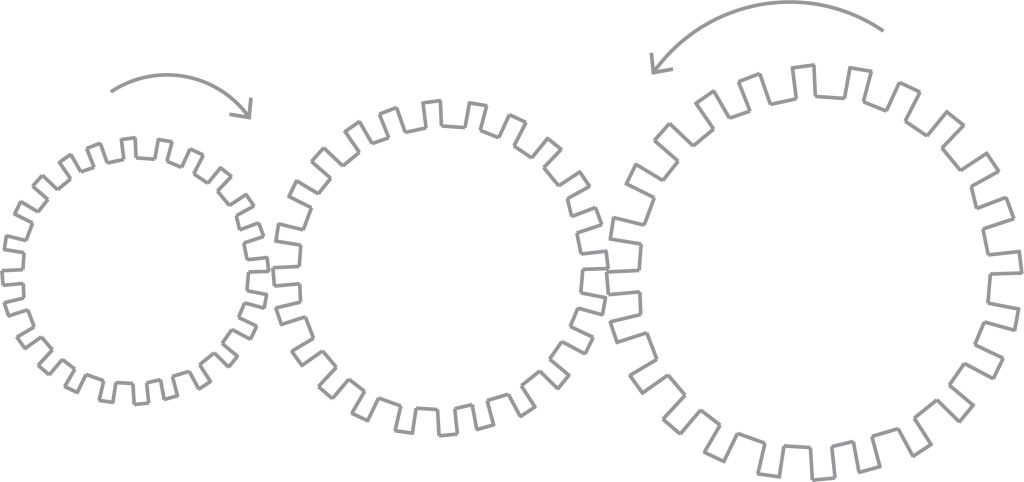
I am a runner and, several months ago, began to experience a pain in the back of one of my legs. Because this was rather persistent, I asked a running coach about why this might be and what I could do to minimize it while continuing with a regular workout schedule. The coach immediately recognized and informed me that although this problem certainly looked and felt like it was with my hamstring, it was actually with a different, tiny, muscle, emphasizing that problems like this almost always start at the hip.
I made a few adjustments and the problem quickly healed. But, more helpfully, it offered a lens through which I have since been able to consider the degree to which challenges that appear separate are often not only connected, but hierarchically nested in predictable ways.
Just as the idea of individual human rights is the central engine of the U.S. Constitution in the spirit of the Declaration in the same way the leveraged smallness of the rear axle of a bicycle propels that bicycle forward, the human rights of individuals considering the organizations for which they work not only matter but are important in a primary way. This is because, as I and many others have been reminded often in the context of religious upbringings, the individuals, who are capable of experiencing creativity, imagination, and intuition, are also capable of thinking about the organizations. Organizations are capable of none of these things.
Like vulnerable-ism is ultimately limiting and seems to be based on the notion of material scarcity, rather than the richness of inward potential, an overly outward focus is fundamentally incompatible with creativity.
Researcher Ruth Richards notes:
“Integrative Complexity … [is] a stylistic drive for a complex integration of information (Barron, 1963a, 1963b, 1969), an aspect of cognitive style which has been associated with creativity and directly with thoughtful, open, and interactive attitudes toward certain societal and global problems (e.g., Barron & Bradley, 1990; Simonton, 1984)… Such complex thinkers will not settle for the easiest synthesis, or the ready-made solution from past experience. In the short run, at least, they turn to embrace disorder ‘which to them is simply the possibility of a future order whose principle of organization cannot now be told’ (Barron, 1963b, p. 156). They prefer a complex differentiation and integration of new inputs. The individual ‘perceives the world in a multidimensional and flexible manner, simultaneously considers diverse viewpoints, and yet manages to integrate all these inputs into a single perspective’ (Simonton, 1984, p. 54).” (https://www.tandfonline.com/doi/abs/10.1080/10400419309534475?journalCode=hcrj20 173)
As vulnerable-ist and creative forces are held distinct from one another, the value and effectiveness of an organization should increase, the removed onus for creative and vulnerable people to paint roses red, so to speak, being arguably not unlike what researchers Mani, Mullainathan, Shafir, and Zhao call “cognitive taxes.” Given that the practice of discrimination based on fixed characteristics such as race and gender in particular is so harmful, perhaps a new kind of segregation between these approaches is needed, preventing vulnerable-ists from interacting with the vulnerable and creative. But there needs to be a path to full citizenship, so to speak. We cannot just build a wall.
It is interesting to consider that, in the past, news organizations have been built to keep journalistic and business development departments – arguably focused on, if not expressive, more observational and neutral, and explicitly impressive activities – completely separate. I recall that, when starting work at a newspaper organization several years ago, one of the first historical lessons I was taught about the company was that this rule was once followed so strictly that even the sharing of elevator rides between journalists and marketers was not allowed. This was probably not a bad idea.
But as businesses seem to have aligned their internal workings to prioritize the building of brand equity in the short term, program and marketing teams have converged.

On Proximity, Escape Velocity & Critical Mass
Why is this so?
While I could certainly be wrong, it seems as though this is very simply as company reputation has increasingly been considered to be the principally important thing, first, in corporate workplaces and, second, in schools understandably aiming to prepare successful leaders for work there.
Such preparation, especially if it overlooks or promotes vulnerable-ist behavior, seems arguably to not always ultimately promote the best interest of these future leaders, but sometimes appears geared, simply, to increase certainty in what looks more like a betting environment. This would simply be a new form of “soft bigotry of low expectations” as lamented by George W. Bush with regard to academic performance standards all the way back in 1999, only with regard to intuitive skills.
What appears most devastating is that it seems as though, having been accustomed to benefitting from fixed, rather than growth, characteristics, some professionals too often to go on to attempt to calcify senseless rules, not realizing that these would ultimately slow everyone’s holistic growth. Not having been trained to practice cultivating intuition and creativity in environments where failure is safe and genuine victories celebrated, some seem to later undervalue intuition and creativity, sometimes even trying to subordinate them to uninspired dictates.
The undervaluation of genuine intuition seems to lead to not only the cultivation of fixed mindsets, but ultimately devolves into mindsets of materialistic determinism – the main premise of both far right and far left political ideologies and, arguably, the reason many organizational systems do not work.
Should responsibility for the provision of basic safety from bullying in the workplace rest on the shoulders of the underprepared, would it be any wonder should it appear that basic safety within some organizations is provided not via a public service model, but rather more like what could be called a type of cartel?
The danger would be that very little individual expression, creativity, or open-mindedness would seem to be employed in the pursuit of only minimal, or worse, simply apparent, legal compliance as opposed to any relative of what would be termed problem-solving in pursuit of fairness at work. It would seem that, with all of the discussion there has been recently about the dangers of artificial, or uninspired, intelligence, it is much less concerning that such technology could usurp the roles of manual and administrative laborers than mercenaries’.
It seems that many of these behaviors worsen in groups. Several years ago, I interacted briefly with a group of young men who had been raised in very privileged surroundings and, when with one another, seemed to treat the degradation of women as a mode of impressing one another. But I both saw and heard evidence that each of these individuals was fully capable of understanding that the women in their lives were people and, apart from the group, they were inclined to help and offer compassion to both fellow men and women they encountered in their daily lives. It just didn’t seem to be their first priority.
But when people who are considered vulnerable are given opportunities to develop and share their perspectives as individuals, we all win.
In order for organizational departments tasked with protecting people against harm, and especially when such harm is based on fixed vulnerabilities, such departments arguably cannot be effective unless this is their first priority, which it can be.
Even so, simply refraining from illegal harm is not in and of itself not an executive function.

On Exchange Rates
We live in an age in which we seem to continuously be encouraged to tell our stories, and this is potentially an extremely good thing. But I wonder whether this is always the case.
In religion we are taught to give away some, but not all, of our belongings freely. In the Sermon on the Mount, a distinction is made between coats and pearls, and it is hard not to pause at this.
It seems as though, while there are certainly times when sharing stories is helpful, there are other times when lessons learned from experience are more valuable.
While our current climate of openness and sharing is a major step forward that has helped many, sometimes encouraging the vulnerable to share their stories early could be likened to pressuring a destitute but brilliantly talented baker to sell her flour, baking soda, and cocoa in bulk and at or below cost, or a jewelry designer her pearls.
I wonder whether it is sometimes also helpful to synthesize lessons from one’e own experience in order to help curate better ones for the future rather than always report abuses before one feels ready or protected in accusatory or unsafe settings. There are times when publicly reporting incidents well after the fact or before the person being reported fully understands the impact of his behavior that begin to resemble another, albeit less serious, form of vulnerable-ism.
It does, however, seem many policies recently adopted by companies to limit reporting are immoral.
What If?
A diversity of experiences offers credibility and perspective almost impossible to gain otherwise and can reveal the limitations of imagination alone.
One of my most and least favorite questions in decision making is “what would you do if?” What if you were not afraid, if you were more grateful, or took some other step forward inwardly, in other words. This is because the question seems, to me at least, impossible to answer reliably without stepping out of the hypothetical.
Even harder seems asking what one would do or feel if they were under different outward circumstances. But we attempt to do this all of the time in policy making, imagining how we would feel about any given topic if we were someone else. But we aren’t.
When traveling, I have often marveled at the distinct difference between my imagination of my destination and the actual experience. I have without fail so far found that the parts of the world I was initially most worried about visiting based on well-meaning and high quality, but inherently limited, documentaries turned out to be the ones I loved most and was most saddened to leave.
In academia, I have often wondered about the effectiveness of simulations of public discourse, as when students are asked to represent the viewpoint of a person from a different background than their own or when the case is made for the use of artificial intelligence in policy making.
—
One of my very favorite activities, regardless of what is going on in my life at a particular time, has long been volunteering with animals. And I have found this has been especially rewarding during challenging periods. I always learn and get so much out of the experience of giving of myself in this way and, in recent years, a particular lesson learned in these experiences has felt especially resonant.
Largely because of well-intentioned but limited and sometimes misleading news reports, when I began volunteering with dogs I felt a sense of worry when it came to ones who were very big and of the bully breeds. It did not take long to realize, however, once I opened up to the particular surprise that is each animal’s actualized individuality, that I could basically count on every one being able to locate some corner of my heart I had not previously known was there and take up permanent residence. It is stunning to consider that there are times these beings are goaded into battling one another – administered performance enhancers in some cases, handicapped in others, and paired deliberately in order to increase the certainty of a particular outcome for the purpose of betting.
This of course feels analogous to some situations involving people. But actual value is developed and recognized within individual beings, nurtured by consensual relationships.
It would be impossible to design an artificial or simulation system that could match the value of perspective added to the world through the type of nurturing interpersonal relationship described by veteran journalist Parisa Khosravi in her deservedly well-received 2017 “TED” talk.
Increasingly frequent discussions between students and faculty at universities regarding matters of free speech and discriminatory speech illustrate how lived experience can seem to be discounted in attempts to treat the surface level meaning of language as always being a sufficient proxy for intended and felt meaning. Everyone involved in these discussions certainly seems to mean well and believe in their respective positions; but it is still notable that the argument that the feeling of security can be excessive or harmful to learning environments only seems to be made when it applies to students. No faculty members making this argument ever seem to argue that measures, such as tenure, designed to enhance the feeling of faculty welcome, should be removed for this reason.
It is arguable that a greater feeling of safety and welcome for everyone would be helpful, and while none of us can know ahead of time how another person or people feel(s) about a given event or circumstance, if and once we are bestowed the privilege of being told, then we do.

On Closing Loops, Absolute Value & Loan Forgiveness
I am grateful I am not alone in making a habit of returning to the classic Albert Brooks film “Defending Your Life” when I feel I am making too many errors in my experience. In it, when Brooks’ character, who is getting acclimated to an afterlife environment in which his earthly experiences are being judged over a series of days in a pass/fail system, asks his defense attorney, played by the inimitable Rip Torn, what happens to chronic failures like him, he is advised, dryly, that, “eventually, they’ll throw you away.”
Obviously a joke, this comment is one of the most poignant in the film, both for its absurdity as well as its relevance to universal fears about failure, especially in what may be termed fixed mindset scenarios. While of course this is funny to anyone privileged enough to have been raised in any form of growth mindset environment or one in which the idea of human equality is valued, it seems to also mirror fears that appear to affect communities undergoing many types of growing pains. As in the film, in real-life systems based on the idea of human equality, we don’t throw anyone away.
In finance, there is a concept called Total Loss-Absorbing Capacity, or TLAC, which is basically a plan for solvency to help guard against the likelihood that an organization will need to be bailed out in case of emergency. But, while intelligent in theory and even when implemented well, the concept neglects to take into account non-financial externalities and opportunity costs, which are often immense in the case of corporations and could arguably be considered loan-like.
There is always a case to be made for forgiveness and a route to redemption.
It might be helpful to view some business strategies that make sense from a fixed mindset perspective but perhaps do not make sense for the future as perfectible, capable of evolution, and even able to be appreciated for having accomplished, in many cases, a lot of good.
I feel this is the case with leaders of many organizations who are rethinking historical approaches to business. It is not that they do not care about people. They certainly do – clearly. This evident when talking with just about any one individually, and it is more than worth celebrating and honoring. It is just that company and school policies sometimes seem to indicate a greater care for other things. It goes without saying that this is regardless of whether they are represented by an appealing logo or endearing mascot.
One of the most encouraging activities I have found in looking for valuable content online has been to search for the word “reformed” in “TED” talks as these underscore the possibility of taking the absolute value of lessons learned while behaving wrongly.
What about disagreements about fairness when no wrongdoing has been committed?
It is a wonder that intelligent people on both sides of the political aisle seem to encounter such difficulty when discussing matters of fairness.
Our country’s significant challenge of bullying momentarily aside, there are good points to be found in the moderate manifestations of both liberal and conservative theories, which make complementary points. Of course it makes sense for both the fairness of the playing field as well as the significance of individual contributions to be considered in the formation of a dimensional concept of justice and, in turn, the formulation of sensible policy. This is because refraining from subtracting value, and adding value, are two important, but distinctly different, propositions. Sometimes it seems as though debates featuring the perspectives of democratic and republican camps resemble a debate between people who believe the sky is blue and people who believe that grass is green. More often than not, it seems they are just talking about two different things.
Many children understand naturally basic concepts of right and wrong, including the difference between distributive and procedural justice. What’s more is that, very often, they do not hesitate to say something about it, even in the face of a bully. These are arguably executive functions.
One of the most eye-opening news stories I recall in recent memory was when survivors of a very high profile and large child abuse case had the courage to point out their disagreement with tactics chosen by the defendant’s attorneys.
Notably, researchers Audun Dahl and Marco F. H. Schmidt report that children “may view moral norms as applicable regardless of whether the protagonist has the relevant goal of protecting others’ welfare.” This may be another executive function.
Growing up, I often listened to an inspiring lecture given by actor Alan Young in which he likened the act of loving to a rose giving off fragrance, without checking first to see who a particular passerby was “or what they looked like. Because that’s its identity.”
Pablo Picasso is often said to have asserted that it takes a long time to become young. This, certainly, is not true for everyone. But it seems worth considering whether, at least in some departments of life, education and work should be less of a straight line than a cycle, possibly circling back at times to consult with young experts, and, potentially, tending, as a result, to spiral upward. I would personally not wish to have an advisory committee, for example, without kids on it; but I feel a paradigm shift of this kind could be structurally integrated in our education system, and at scale. (What if organizational leadership teams could be held accountable by young people for fulfilling their responsibilities to to uphold individual human rights?)
On Maternity Wards, Listening Agencies & Scale
After encountering bullying by a person in authority some years ago, I got to thinking about what I sought both to give and receive in a creative environment. For me, it felt simple. I realized that what I sought could be likened, in a way, to a maternity ward – a place where encouragement and, more importantly, safety, were provided for the purpose of honoring and supporting work in the areas of artistry, problem-solving, and creativity. But while this kind of safety is often afforded by organizations on paper in the form of prohibitions against race- and religion-based harms, for example, in practice it does not always seem to be provided. In moving forward, and in finding opportunities to mentor others, I found it was worth at least aiming to be a sort of doula, so to speak, when helping young people develop potential beyond what they had perhaps imagined before, in order to help ensure they felt encouraged, safe, and supported. I realized that even though they overlap quite a bit, the provision of safety, teaching and coaching are all distinctly different activities.
Educational maternity wards in their current form arguably do not always do enough to preserve all of these activities, especially when discrimination on the basis of gender or religion are concerned; and I believe it may be worth exploring the role of youth voice in remedying the problem.
Even though politics and journalism have obviously always been about much more than hunting and gathering, in 2016, this idea, for what was termed a listening agency, seemed worth exploring to complement and support what is best about both of these sectors based on the idea that self expression is more valuable than impressive communications, like lobbying and advertising, which sometimes seem to have the effect of weakening politics and journalism. But an element of youth voice was key, and I wished to find meaningful feedback.
It is hardly a wonder that, just as soap operas sometimes leave something to be desired in terms of a tendency to appeal to audience’s reactive, rather than creative tendencies, what could be called soap news tends to fall into the same trap. The introduction of fear into any situation seems to cause harm and hinder creativity.
It is interesting that for all of the attention paid recently in the world to the issue of emotional health, with regard to fear in particular, some researchers have found that “the relationship between creativity and psychological disturbance is more a matter of affect than of different ways of thinking.” (168).
Does this necessarily mean the answer is to replace news commercial breaks with stillstrings of abstract art? Of course not. (Although this might not be the most terrible idea in the world.) Professionals of the future will need to become adept at recognizing and manifesting real solutions, and, in order to do this, it is important to be informed and to greatly value news. For this reason, it still seems worth taking stock of the nature of journalism as a structural element in a modern democracy – what it is made of, what types of forces are exerted on it, and whether these properties are compatible.
For all of the discussion there has been in recent years about the need to better value local news, it might be important to reinforce the utility of national and international journalism at this time. This is as it seems to be the only way to draw the world’s attention to human rights abuses, which are arguably some of the most important news stories for the ways in which they relate to every other type of news story. Knowing about the struggles of people we may never meet in person matters a great deal.
But gratuitously fear-based topic curation strategies in news designed to grab attention could arguably be likened to setting off a firework in the middle of a room of musical composers, temporarily deafening them, just to be able to pick up the pocket change dropped on the floor as they scatter.
I believe that the provision of safe and encouraging spaces for the practice of one’s intuition and discovery of one’s talents and problem-solving ability could be the central value proposition of successful organizations in the future – regardless of sector – and that expressive outlets as essential nourishment could be better integrated into all of our lives.
But what is needed in order to be able to cultivate and express one’s individual abilities? This is a question that requires a lot of thought, but certainly safety and supportive relationships are helpful. Regardless of whether one is working in the arena of sports or the arts, it is interesting how different the practice of coaching is from vulnerable-ism. I feel this is a really important, and perhaps central, distinction. Working with coaches can be incredibly difficult. But a coach’s intention is always to see an artist or athlete thrive, and she or he at least attempts to ensure one is ready before proposing a given next step.
It isn’t that one wouldn’t learn from vulnerable-ists. One certainly would. But this would be a much harder process and, arguably, one to be avoided if at all possible. When a child recently famously saved herself from a kidnapper, she demonstrated immense intelligence, bravery, and aptitude, perhaps some of which was developed in the experience of enduring criminal behavior. But her kidnapper was obviously not extended credit for this.
After learning from a coach, one should feel challenged, certainly, but stronger, more self-reliant, confident, and closer to one’s goals – never defeated or traumatized. Perhaps even more, after coaching, one should feel more in tune with one’s own intuition than they were before, having benefited from the lessons of a low stakes opportunity to get a better feel for good decisions.
A Sawdust Paradox
Perhaps the purpose of cultivating intuition isn’t to be more productive artistically or better at sport, as important as those are. Maybe it is the other way around – that it is important to engage in this kind of work, rather, in order to cultivate a connection with intuition. Art in particular is, at least in a way, almost like a form of journalism.
Art students are generally taught early on in their educational careers to appreciate one idea behind Rene Magritte’s Treachery of Images series – that representations are limited – but this idea could be carried into other disciplines too.
It would be most important, it would seem, regardless of how impressive or even inspiring a particular project, policy, or creative organization is, to determine whether it helps connect one to one’s own intuition and best self, and, if so, to encourage – but not lean on – the artist or organization producing the work.
What is valuable to me about a creative project seems to be the way that it awakens my imagination and inspires my intuition, like an original animated film or piece of abstract art that leaves room for my own interpretation.
Some projects never need to be remade because they are remade every time they are encountered. Researchers Louise Sundararajan and James Averill assert that, to be creative, an activity needs to be effective, novel and authentic. This does not preclude an audience’s inward experience of an artistic work, which can arguably be just as creative as what is being experienced outwardly, which is always rasterized, at least to a degree.
Even words and data, while invaluable tools for sharing information and inspiration, are limited. It is curious, for example, that one may say that they love land, love real estate, love pigs, love pork, love forests, and love lumber all at the same time. In each of these pairings, it is obviously the meaning of the verb that is actually being changed even though it is only the noun that morphs at first glance. Even in the case of data, it always seems there is a need for greater resolution than is available as valuable as studies of the relative prosperity and health of various zip codes certainly are. Intuitively it makes sense that, even at the resolution of a home address, it is still practically always difficult to discern the degree to which true equality is experienced within its walls.
It is not that art and data are not valuable – they are certainly very valuable. It is just that we need to be able to have honed our intuition in order to distinguish between the art and the artist, the melody from the lyrics, and sometimes even meanings from words themselves. (It may be that creativity is a lot more closely correlated with a knowledge of the right thing to do than the propensity to do it. In fact, blindly following the guidance of creative people without an inward sense of rightness about it is generally not a good idea.) Demagogues are arguably as common in pop culture as they are in pop politics. But demagogues do not make themselves. Demagogues are made in the leaning.
When a pop brand, a political party, or company form an alliance, roll out a campaign, or publicly take a stand in support of some social or environmental justice issue, this may be a good thing. Although such decisions are often described as greenwashing, this term may refer primarily to the temptation to lean on these brands. But these changes in corporate and brand practices are still arguably helpful. It seems that it is more in leaning on than in the simple observation of the formation of these bonds that one identifies with the hollow feeling of a hurt healed only slightly.
This is why it seems what could be termed headaches like the #metoo movement are perhaps not a sign of regression but progress as they indicate more individuals may be perhaps looking to intuition rather than just surroundings, news, and films (important as those are) to indicate individual value.
Many individuals’ commitment to public authenticity despite outside pressures is awe-inpiring, and it is worth remembering that, as researcher Carlina Rinaldi once famously put it, “children cannot bear to be anonymous.” (49)
In 2016 it seemed to me as though, while it no longer felt like a good idea to lean on journalistic institutions for perspective, it obviously continues to be important to stay in supportive relationship with them – instead, perhaps in the future, by encouraging ethical behavior.
I believe, for the purpose of subtracting marketing forces from the world, an education sector listening agency could be helpful. But a danger, as in all proxies, would be in the leaning. Individual evolution is what’s really needed.

On Light & Rocket Fuel
I love the Maya Angelou quote: “you can’t use up creativity. The more you use, the more you have.”
What if one of our next steps out of seeming confinement to unhelpful parts of the picture of the world around us involve supporting the integration of creative expression into daily life more seamlessly through implementing a responsible, kid-friendly listening agency model? Just as the placebo effect and post-processualism have changed medicine and archaeology, respectively, what if there could be a sort of post-processual journalism?
Perhaps one of the benefits of what seems to be such a dark time is that proof has been supplied that even in what appears to be a void, previously unseen light becomes visible and voices that had once seemed dispensable, though quiet, are recognized as being important as anyone else’s. (It’s interesting that Hawking radiation is rarified.)
As in any learning process requiring the solving of a tough problem with constants, current times require creativity. But this is good news, because creativity is a plentiful resource to which we all have inward access and, to the degree that we work together to uphold the idea of human equality, we are literally on the same team.
Just as bullies are infinitely more than particular behaviors, negative fourth graders, so to speak, and adults in SEL topics are by no means different species.
And there are incredibly inspiring examples of creative problem solving all around. (How often does a news story feature such an eloquent last line?)
One of the most profoundly perspective-changing moments I experienced in graduate school was as an audience member at a talent show of law school students – law school students who were immensely talented singers, dancers, and artists. Creativity, and the correlate ability to discern between right and wrong, can be found literally anywhere.
While it does seem important to sometimes segregate those who are mired in the idea that vulnerable-ism is their only way forward and those who are doing productive work, the reason no one is ever thrown away is that we are all equally valuable. Individual creative potential is present within each person, and we are all making our journey from childishness to childlikeness at an individual pace.
For any young student who has marveled at the implications of the famous double slit experiment in light studies, it is important when considering light to always bear in mind both its observable particle and potential-filled wave properties. If this could be the case for world events, it would be irresponsible to watch the news all of the time and not spend at least as much time exercising our creative muscles, and provide safe and encouraging places to do so.
That the speed of light is constant with regard to just about everything that is not also traveling at or approaching its speed is awe-inspiring. Just considering this is to imagine it is as if everything even slightly dark is happening in a space that is infinitely small, and that waves are more important than particles.
Just as the ancient Greek language distinguished between different ideas of love through the use of language, it also (brilliantly) distinguished between what were termed “chronos” and “kairos” concepts of time, with one focused more on observed events and, the other, potential. With all of the attention modern news outlets direct towards the documentation of what we all certainly need to know about the former, wouldn’t it make sense to establish places, perhaps supported by coaching and free from vulnerable-ism, where the latter could be explored?
In the Bible one reads David encouraged himself. When focused on possibilities that have not yet been made visible, maybe we can encourage ourselves more. It is natural in a bind not to focus strictly on the problem at hand, after all, but, in safety, on paths toward solution accessible through the exercise of individual creativity. Because not to do so would be to bury the lede.

 Recent Writing