
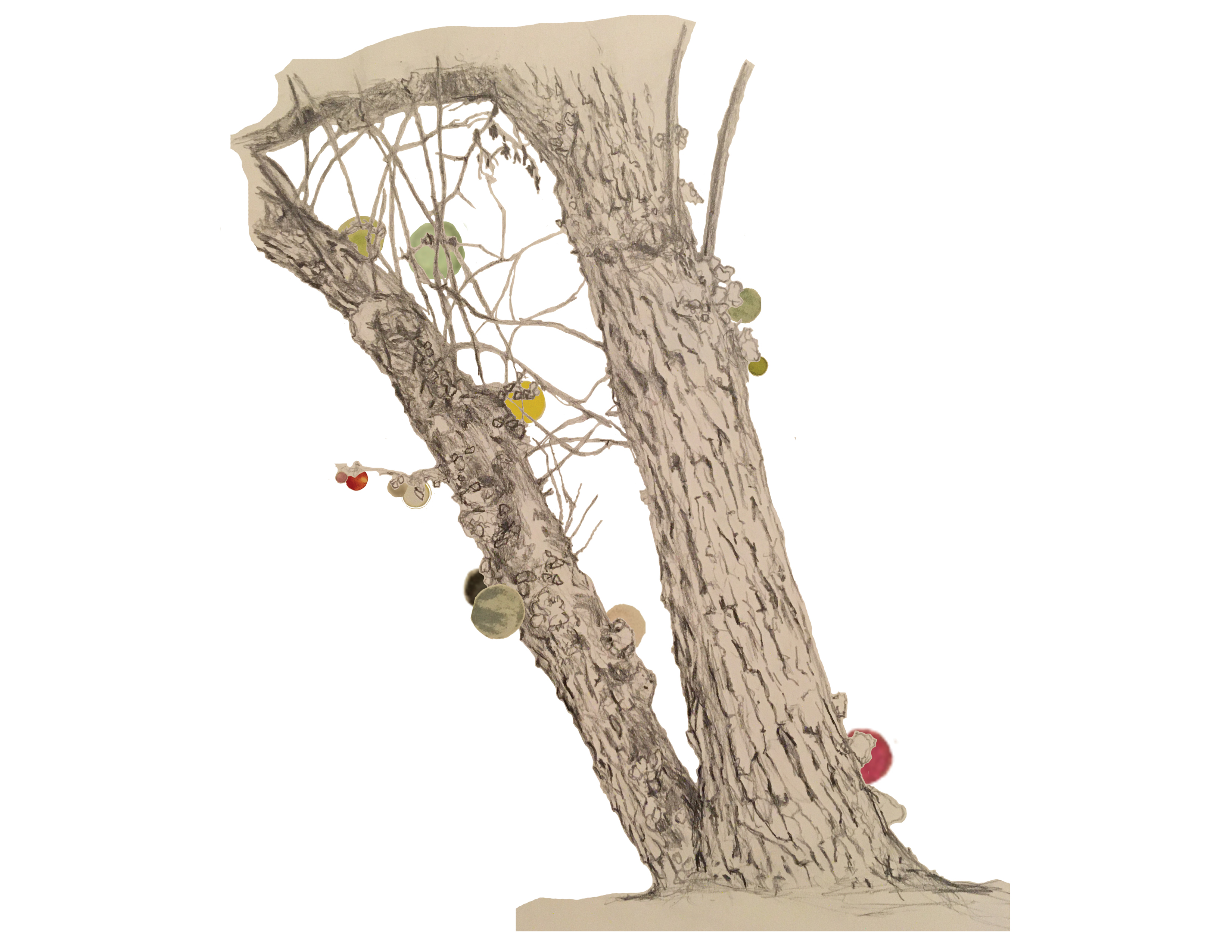
On Seeds
Paul Cezanne once wrote “the day is coming when a single carrot, freshly observed, will set off a revolution.”
While the literal interpretation of this assertion is questionable, it is true that there is arguably much more substance to be discovered, felt, and appreciated in the elevation of one’s viewpoint than, intrinsically, in any one thing observed.
On Atmosphere
As ratings-based news organizations drive not only coverage, but interpretation, of news, narratives that have emerged increasingly seem to me to have tended to be only partially helpful. In addition to being jarringly celebrity-focused (will it ever be possible to learn about the latest updates in the fight against Amazonian deforestation before every last celebrity’s every last bodily function?), they have become increasingly opinionated. In his Federalist 10, Madison said “a body of men are unfit to be both judges and parties at the same time.”
I have written before about an observation, at least based on my experience, that when people “vote” with clicks, these tend to amount to relatively mindless expressions of negative emotion much more often than conscious, invested, and constructive engagement. But, regardless of how many people tune into content out of a desire even as seemingly innocuous as to know what other people are consuming, there is no question there seems to be a clear draw towards particular forces it would be hard to call good.
On Ultraviolet Rays
When a popular politician ran for office recently, his proponents seemed incessantly to point to his “success” as a stand-alone qualifier. But this was rarely defined. While it does seem true that, in a search for attainments such as fame, wealth, and even beauty, people often become followers of those in possession of what is rather blindly accepted as worthwhile, is celebrity a fruit of anything truly desirable, or more like a fickle dab of glitter most people would probably prefer to remove?
We are frequently told that, as citizens, the pursuit of happiness is our birthright; and this is an immense gift. But, as wonderful a locomotive as our government is, it is helpful to remember that, while not an end in and of itself, this vehicle’s perfectibility does help offer transport to a destination where it is more than possible to cultivate the more substantive fruits we are all taught to desire: Happiness, peace, love, self-control and so on.
Still, in a clicks- and ratings-oriented public square, is it even possible to better underscore and more continually articulate the contours of this collective goal as opposed to its opposite? I feel it is important to note that for people to come together, even digitally, at a click bait locus is not for them to unite. Consumers, if anything, are simply congregating in these instances, and content producers, conglomerating.
On Soil
Given what has turned out to be a through-theme of this blog so far, I would note that I have given considerable thought to what made the talk show team where I felt so constrained at CNN different, and, importantly, so much more dangerous, than other parts of my first professional home. Why did it seem everyone responsible for standing for even the most basic and common-sense notions of safety was so afraid to do so in practice?
I believe it was the element of celebrity as a multitude of weak-tie celebrity and political affiliations seemed to create an atmosphere that felt at the same time meaningless and devoid of a level of courage (which would have been significant) sufficient for the provision of even basic protections.
On Roots
Particularly notable about the celebrity-focused culture to which a ratings-based informational infrastructure gives rise is its affinity with oligarchy – and even monarchy.
I have frequently written about my own desire to, when sharing portions of my own story, be able to do so while providing proposed solutions to help prevent anyone else from feeling unsafe at work due to celebrity influence. And it seemed, particularly as so many other women spoke up at the same time about their own experiences, that my focus on problem-solving would help enable me to be heard.
But just the opposite happened. Even though my hope had been to speak up totally impersonally, and then totally privately, and then totally anonymously (and protecting the anonymity of my colleagues), I felt there must be some way of speaking up that would optimize helpfulness, so long as I could do so in partnership with someone or some organization willing to listen with a goal of focusing on solutions and, to the degree possible, protect individual people as I am primarily interested in helping reform systems. But our current information infrastructure allowed only for the sharing of a small number of accounts – just enough, it seemed, to inoculate themselves against reform – and, notably, those focused almost solely on problems, rather than solutions, before closing ranks and borders.
While many interested in problem-solving have perhaps learned not to cast pearls in these organizations’ direction, so to speak, the question remains: what infrastructure can we build to serve as a launching pad for ideas born in adversity?
On Sunshine
I believe the answer can be found, at least in part, in the practice of mentorship and, particularly the type of mentorship that at least should be not only possible, but plentiful, in educational environments.
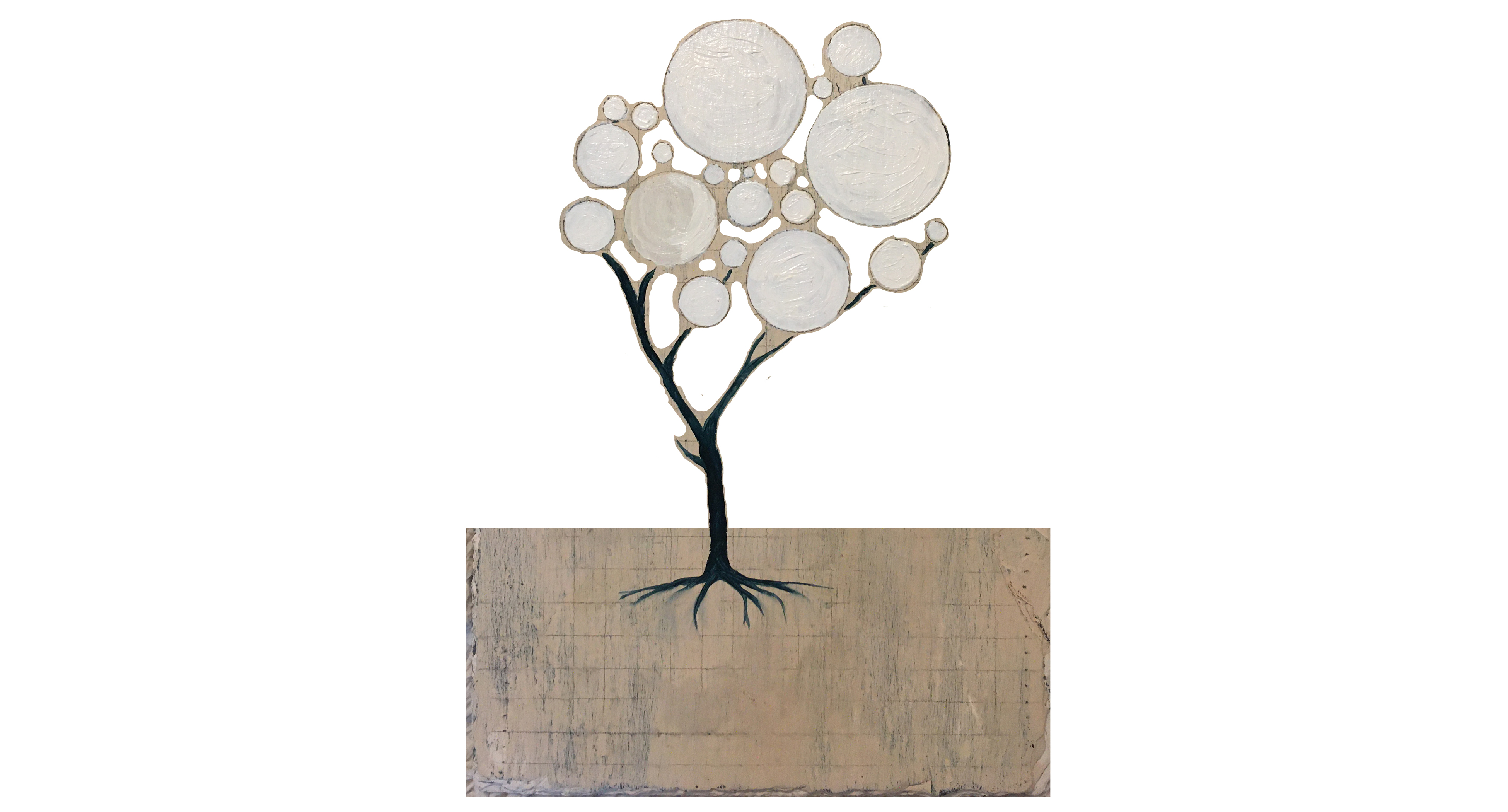
Mentors should arguably be like gardeners, seeing the potential for the fruit of healthy qualities, ideas, and even inventions as well as entirely unique and surprising contributions – recognizing that these are born of a balance of freedom and minimal constraint – not short-term bottom line-focused bonsai artisans who would restrict such potential out of a preoccupation with a desired smallness and prescribed form for their charges. They should be wise enough to know that original ideas spring forth, arguably more often than not – although by no means always – from the soil of adversity. In a solutions-oriented atmosphere, this would need neither to be focused on nor obscured or hidden. (In Federalist 20, Madison notably asserts “experience is the oracle of truth; and where its responses are unequivocal, they ought to be conclusive and sacred.”) Experience, in other words, matters.
In a solutions-oriented atmosphere, individuals who may have felt planted in adversity can be watered with good information, yes, but, at least as importantly, fed by the gentle sunshine of inspiration and encouragement. Not coerced by an overload of celebrity influence.
Such inspiration often can often take the form of a story of adversity overcome and, perhaps, when pressed through the function of an individual’s perspective and gifts, even transformed into something more valuable to the world.
An individual who may feel pressed by adversity to plumb the depths of her or his internal resources to problem-solve will be welcomed to say, without having to shout, “I am not a dilettante; I am a refugee.”
On Shelter
Although there are certainly exceptions, and while there also comes a time to share, it seems to me that two necessities for what may be termed safe havens for innovation are privacy and protection from dominating forces. This is if for no other reason than that, while perhaps planted in adversity, creativity blooms in freedom and safety. In his ballad “Wildflowers,” songwriter Tom Petty memorably tells a loved person “you deserve the deepest of cover.”
I believe it is important to remember that creative people need to be able to relish the love in their lives and are perpetually, in a way, in labor, benefiting not only from nurturing and encouragement but – just as importantly – safety and protection. Perhaps this is one reason schools, absent the influence of celebrities and shareholders, may have potential to be more like fertile gardens than factory farms.
I recently read that a celebrity couple known for their advocacy work has attempted to form a partnership with a large university and felt disappointed and worried for its students. I hope I am wrong about the potential effect on the organization of such an affiliation.
On Fruition
I believe that a deeper consideration of what is conducive to innovation may help enable us to transition from what is arguably an over-reliance on appearances-focused organizations.
Creative people, especially when recovering from trauma, benefit greatly from environments conducive to healing and problem-solving. But what I believe could be appreciated more is that the world stands to gain so much, too, from what is produced and may simply fall to the ground in the growing process.
 Recent Writing