
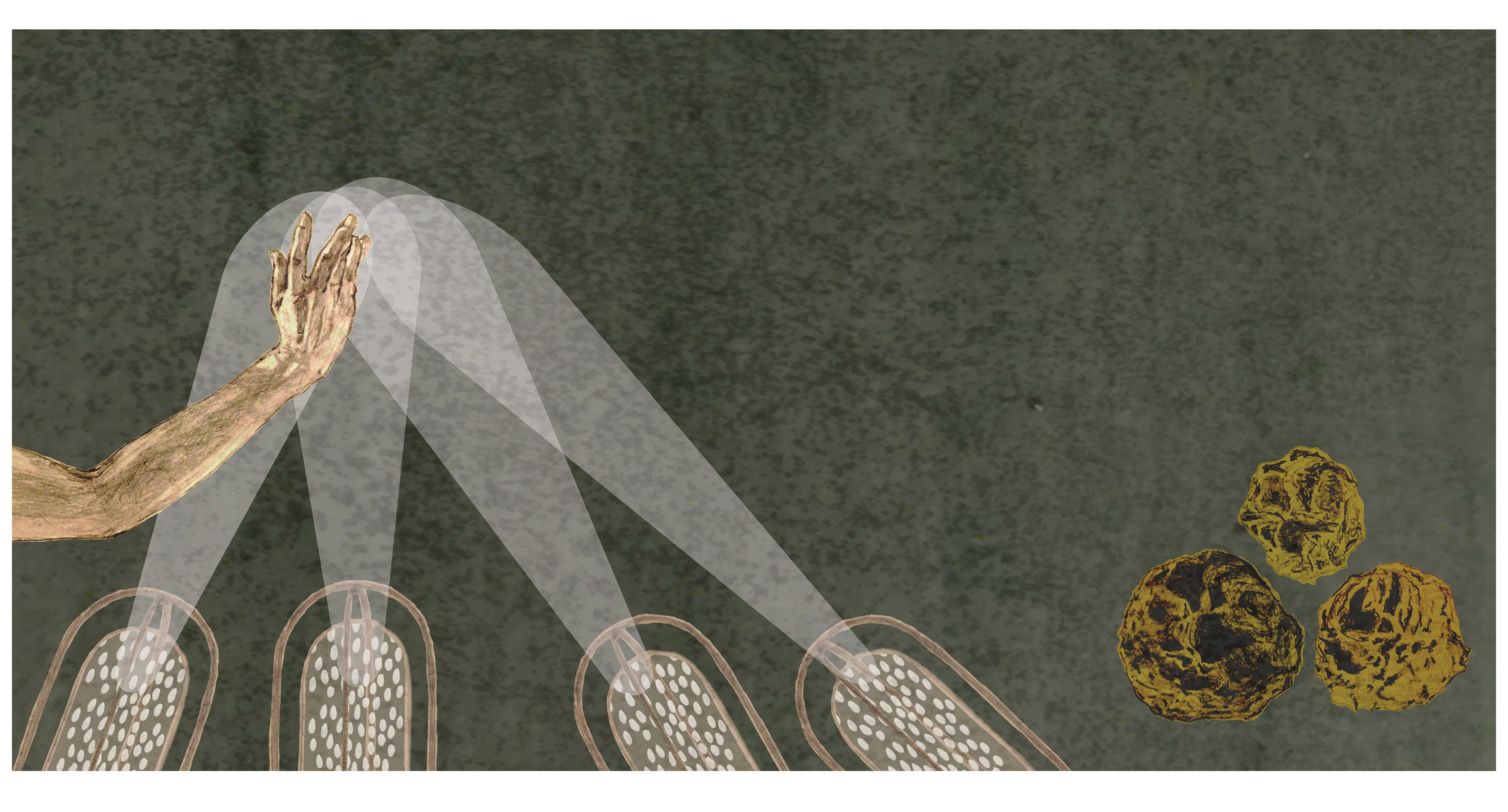
A False Dilemma
There seem to be two distinct, although not necessarily contrary, bases from which too many altogether avoidable disagreements stem today, with one side advocating for decision-making based only on outward, measurable facts, and, the other, pressing for better consideration of more abstract and inward matters. But both sets of data are essential and, like infrared light, the latter is real and verifiable.
What for so long seemed to be missing – an acknowledgement of the notion that many invisible facts are best knowable at first only by those who have had particular experiences – seems to be met very often with skepticism. But despite an atmosphere of worries about bad faith, the proof remains, and where there appears to be a dearth of common ground, both forms of data obviate the need for battle by laying solid groundwork for more.
On Scaffolds
I believe one reason so many people’s hearts seem to be touched about the same invisible issues simultaneously, prompting them to speak up together, is that there is strength and safety in numbers. But movements that arise as a result, if such safety becomes a crutch, present special challenges in their ability to be corrupted and commandeered.
The MeToo movement held great power to inform those who were unaware about immense, but obscured, expanses of opportunity to improve American systems and organizations so as to tap into untold and progressive insight, brilliance, and empathy.
But the moment the adjacent initiative “Time’s Up” seemed to take a carnivorous posture (even in name) and then, on the preposterous conceit that it represented large swaths of women, appeared to be associated with the sale of corporate endorsements for cash in the form of celebrity salaries, it became excruciatingly obvious that any subsequent social justice movements would more instantaneously trigger corporate attempts to co-opt. This development does not seem to have been out of the goodness of corporations’ hearts, but, rather, a classic and predictable whitemailing overture.
Simply letting the steam out of a train engine full of potential doesn’t help it advance, and a recognition that there does not appear to be room enough for everyone’s progress sometimes means, in addition to needed rearrangements onboard, it is also time for a build-out.
Systems, not people, become outdated; and I have often wondered whether either the MeToo or BLM movements would have needed to expose so many faults so varied in degrees of intentionality had proposals for an informational infrastructure overhaul been heard earlier.
But perhaps they would.
On Navigational Systems
Keeping conversation at an artificially superficial level and avoiding even broad-stroke criticism on a hypothetical playing field isn’t brilliance; it’s artificial intelligence. Profit-first corporate conductors operate according to algorithms just as much as computers do. And no one – certainly no thing – ever permanently inspired the world out of an automated sense of obligation or for theater; because changing the world requires inspiration and love, which algorithms do not have. It is not the presence of an obligatory commitment to supporting the idea of human equality in American organizations that matters, but rather the primacy of such a commitment. Such a commitment, if sincere, is open to making room, not insisting on keeping the parameters of an old and stale framework in place, arguably necessitating only rotation where expansion may also be possible.
In an appearances-based system, it becomes more difficult to discern between truth-telling and advocacy or advertisement; hence the need for a truth-based informational infrastructure that allows for both visible and not-yet-visible facts to be valued. Regardless of corporate trends, this requires the persistence of individual voice, courage and sacrifice, as well as organizational support for ideas conceived the only place where they ever can be – in individual hearts.
Until the primacy of this center of gravity in nurseries for ideas becomes more universally recognized, media organizations will continue to not only diverge from one another rhetorically but attempt to give new movements the false choice of being absorbed or scapegoated for what are almost always publicly-traded corporations’ misdeeds.
I believe a sure sign we have devolved into an appearances-based system is that truth-telling has been subjugated to storytelling, rather than the practices’ normal orientation the other way around. For this reason, as assuring as the appearance of safety new movements afford may be, and as important as it is to support them, I believe it is just as important not to allow oneself to be permanently represented by them.
 Recent Writing