
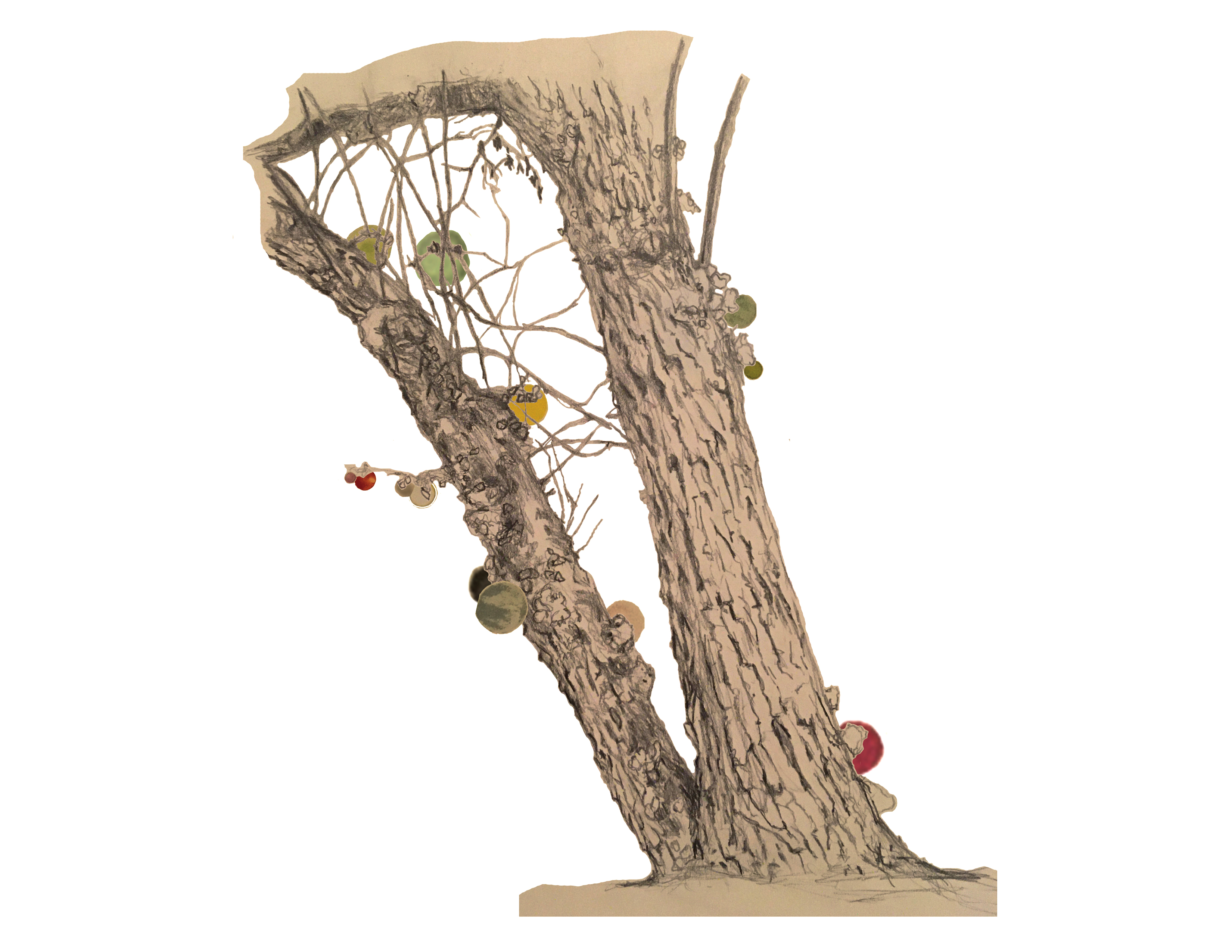
When… When… WHEN!
For much of lockdown, I did very little driving and, when venturing further than I had in a long time by car this week, it was suddenly more notable than before how geographically small my day-to-day life during the pandemic had become.
But, like anyone emerging from a constrictive, and necessarily transformational, experience, I noticed differences.
Living in such close quarters, and being less able to afford to travel, I at least have tried to begin to better recognize my inward environment as being the most important one and have become a little bit more discerning about the kinds of media I consume.
Particularly as I have had time and more of an inclination to prepare my own media meals, so to speak, I have become particularly attuned to the kinds of ingredients I find most helpful: unprocessed, for sure, complex, varied, and substantive. Please hold the fluff until dessert, I frequently would like to say. Please let me decide how much seasoning I would like.
On Orders
Prepared foods are wonderful. I just don’t believe they should be our only choice; and to be a grocer is not to be a chef.
As media producers and consumers we should all want the freshest ingredients with which to formulate our opinions; and it seems to me that, while it makes sense for the produce of news to be gathered by large organizations, it is sometimes helpful to be able to access the seasoning of punditry from trusted, individual, and independent citizens.
There is so much that each of us can contribute, equipped with the fresh ingredients of up-to-date, reliable information; but, while analysis and context is always helpful, news need never be overly-produced nor seasoned with opinion.
On Appetizers
I do not think there has ever been a time when I have read a story summarizing a speech or other raw news event for which, when I watched it myself, I didn’t come up with an at least somewhat different take on what was important, what was most likely meant, and why.
One concern I have as more people transition away from having more time than they had before to ponder public affairs is regarding all that gets lost in translation, although I believe there are simple answers to the predicament.
On Digestifs
I have said before, half in jest, that commercial breaks could conceivably be replaced with abstract art or musical breaks occasionally in order to help encourage creative and problem-solving thinking. But, in light of the fact that so very much time in recent months, and even years, has been afforded to topics of such fleeting importance, I feel a critical look at how newscast courses are proportioned could be revisited. A great deal of legitimate news produce simply cannot be digested in one sitting – because either we or it are not ready. But we need not ignore it.
When one is consuming news, one actually needs some lifeline to the sublime – be that abstract art, athletics, loving relationships – in place. Some form of digestif to help us consider – or even just remember – all we have to offer and what we can do to help.
On Futures
But what about that which appears impossibly distant or intractable?
I still believe journalism in the future can be a place where seeds may be offered for eventual planting, not dropped like ballast that would impede the unprepared. Perhaps until then, depending on expertise – and not shock value – in presentation, these can serve as the ball bearings atop which we are empowered to move away from our current standpoints in the directions our hearts lead in addressing seemingly very large problems in our own individual ways.
As we emerge from our cocoons Americans may well be drawn to new forms of information adding impetus to calls for evolution in the media landscape, but this may be a good development. Caterpillars and butterflies don’t eat the same things anyway.
 Recent Writing