

It literally hit me on the head today. Last year, while storyboarding Gertrude Saves Her World (which took about 25 minutes) I worked through such a multitude of ideas so quickly that the only way to handle them seemed to be by mapping my book using back-of-the-napkin-type paper scraps I’ve decided to leave in place even now. Being an impermanent installation, this constellation of notes occasionally rains a concept or two for revisiting, and I felt right about paying particular attention to its most recent bestowal.
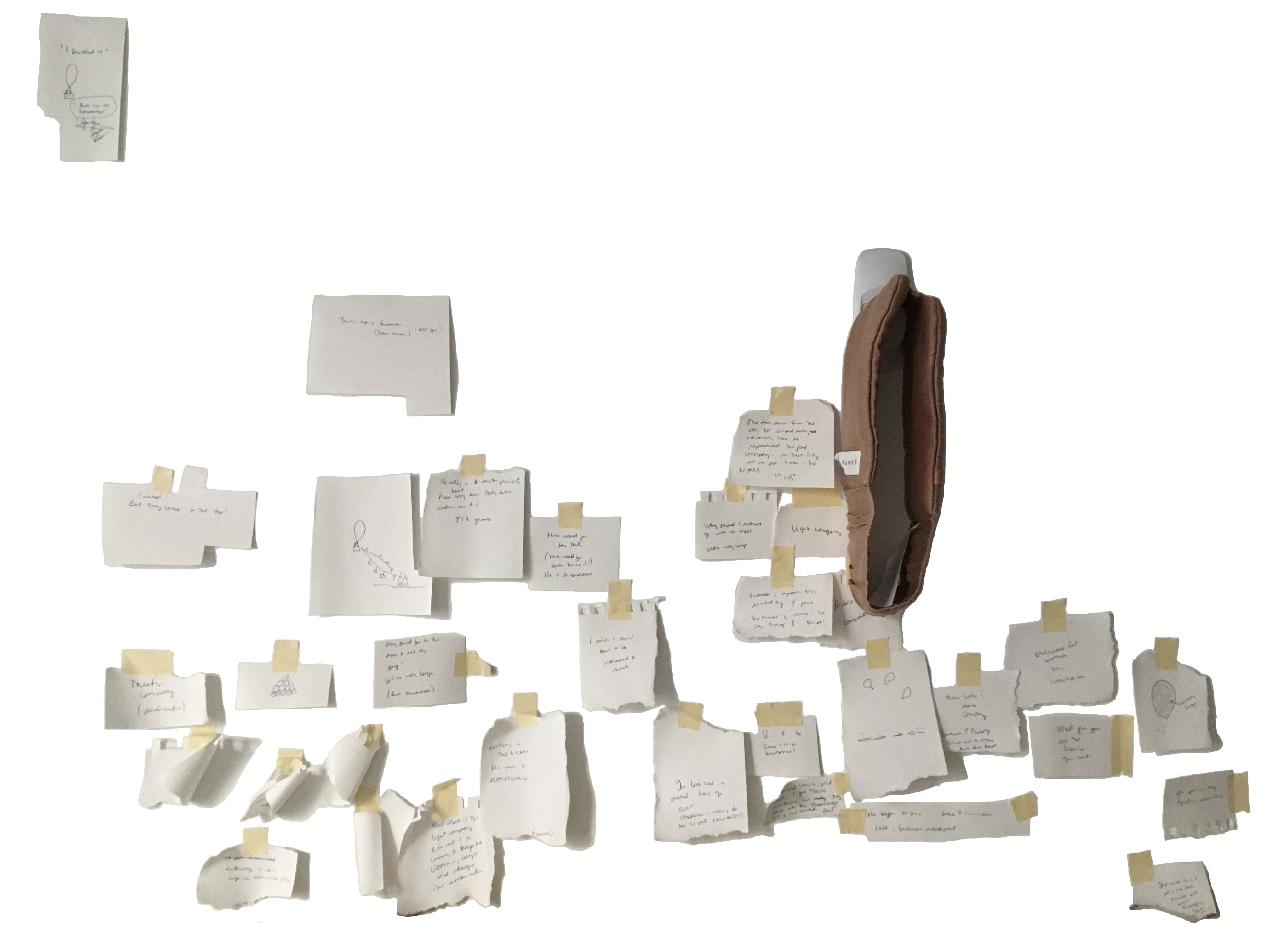
While encountering a group of raras after learning about the corrupt and light company-controlling dodos’ mode of operation, Gertrude‘s titular character gathers the courage to assert that her “story is not who [she is] at all, actually,” prompting pressure from her exploitative would-be mentors to refrain from critiquing – and fixing – systems her story surfaced and try status quo-supportive mud-slinging instead.
On Stories
In September, former National Security Advisor and Secretary of State Condoleezza Rice made several interesting observations about the United States’ recent withdrawal from Afghanistan, noting that “for some reason, people – perhaps including the administration – bought into a narrative that I think is actually a false narrative… and it colored the way that people thought … I think that’s what governed the way that folks thought about this … So I think it’s the way that the narrative was turned that led to … some bad decisions.”
Where did the media world’s increasing emphasis on censored and prescriptive narrative, rather than exploratory journalism, originate? I believe the answer lay in a simultaneous lack of accountability and a profusion of fatigue in performing unlucrative work within an appearances-oriented framework designed to undervalue it.
Today it may be more important than ever to distinguish between journalism and business-propelled narrative design.
While there is considerable value in stories, such as those survivors of abuse and adversity have felt compelled to share in recent years, truth-telling is not to prescribe or censor narratives, nor is it to circumscribe outcomes. And, crucially, those most interested in truth are as willing to listen as they are to speak.
Further, where predetermined narratives and premature judgments have done harm, truths and stories that needed to be told have begun to make changes.
Grace to help
I’ve adored, recently, being reminded of the idea of “find[ing] grace to help in time of need,” but, while not the common reading of the text, realizing that grace to help may be an outward-focused concept. Grace to help. Not grace to be helped.
In keeping with the theme of this blog, one key difference that has stood out to me between the MeToo and Time’s Up strands of the modern women’s movement in media is the distinction between the courage and selflessness it takes to open conversations by being willing to tell others “this happened to me,” rather than the dialogue-narrowing “it’s over for you.”
On Balance
While I practically began this blog with the analogy, it feels appropriate to reinforce today: just as the hunting of endangered elephants for their tusks is not only a cruel abuse of worthy individuals but a senseless theft of immense value from the world, individual people, including women – with all of every one’s artistic, intellectual, caring gifts – are both inherently worthy and, also, worth much more to the world safe than unsafe. I believe this last statement is the main idea of this blog.
Just as homes can be decorated without ivory and soup can be made without shark fins (I incidentally learned from Pelagios Kakunja recently that, whereas a killed shark brings a fisherman roughly $150, a shark allowed to live in safety brings approximately $360,000 per year to a local community), men – even in media companies – can achieve confidence without women or girls being trapped or handicapped to be made prey.
I still believe that it makes more sense for HR departments to focus on resources for human beings who are dedicated to helping (not just human beings as resources) and that such a paradigm shift could help branded organizations – and journalism organizations, with all of their knowledge, in particular – transition from hunting grounds to protective reserves. (Even if these organizations don’t have internal research teams like those described by the recent Facebook whistleblower, they may be aware of trends – and possibly glaring trends – regarding human rights abuses the nondisclosure agreements they’ve had signed over the years reveal.) I still believe the only way to require, or even encourage, such evolution may well be to discourage journalism corporations from issuing stock.
The downside to this kind of change, of course, is that carnivorousness will transform into frustration; but such a stage is only temporary. Just as game parks are able to morph into protected areas as the rangers who patrol them themselves change, in a broader landscape rewilded with journalism, branded organizations could arguably become particularly safe places.
On Brighter Notes
To whomever is reading this blog, I hope you will remember you are by no means whatever has happened to you. But I believe that, so long as you can tell it in the first person, your story is your tool – for learning certainly, and possibly even for teaching – but your story is far from being your – or anyone’s – identity.
What a wonderful world it would be if we all kept this in mind as we allow a fairer future to unfold.
 Recent Writing