
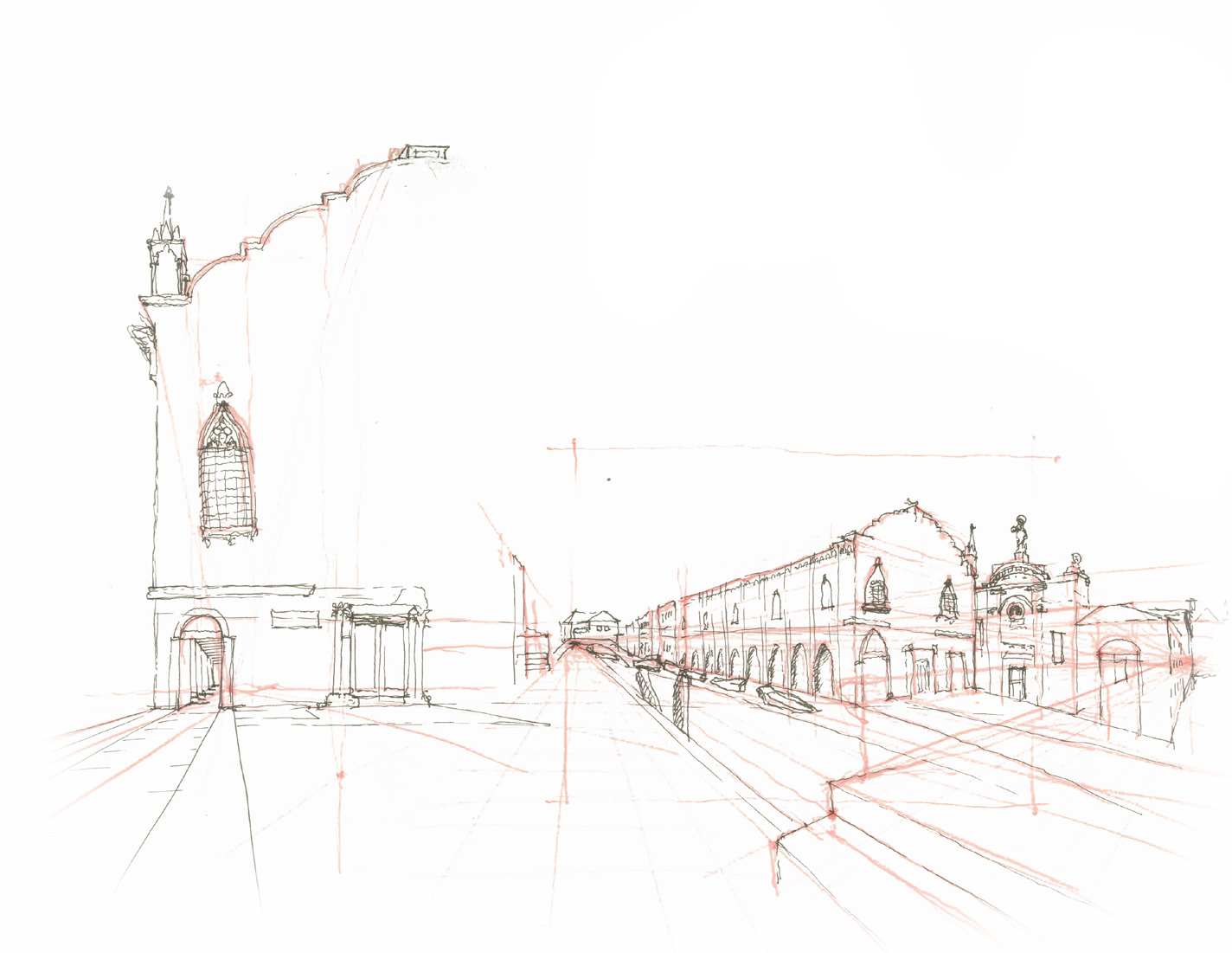
Ever since I was a kid, I have adored shopping for art supplies, poring through pen, marker, and paper options in order to be able to draw the perfect line; and I got to thinking about this after picking up two uni pins yesterday. What makes fineliner marks so beautiful (even when drawings aren’t)?
On the Need
For all of the constructive media-critiquing I have done over the past almost-seven years now, there is still almost nothing I find more enriching – and comforting – than a good independent documentary. In recent months, I have loved learning about former Special FBI Agent John O’Neil and his heart-mission to protect all of us from real danger, and danger that touched my life personally. Like World War Two-era innovator Hedwig Kiesler, he’d been responding to an inward sense of urgency to share ideas and solutions probably difficult to reconcile with the unwillingness of his community to hear.
On Headwinds
I have been thinking recently about forms opposition to new ideas can take and, sometimes at least, these seem to show up not only as obvious resistance but the appearance of clear, or cleared, paths even where obstacles actually remain.
I do continue to believe that, in addition to the journalism sector’s unwillingness to hear, a false appearance of resolution to the movement in support of better accountability for the industry in recent years has been treacherous. The dismay many women in particular may have felt watching the crassness of corporate Hollywood’s broadstrokes attempts to summarize and resolve the intricacies of and trauma behind individual journalists’ still-hidden intellectual contributions has felt notable to me, at least.
While Hollywood stories are important, they are less important than first-hand accounts and, critically, the solutions the latter bear; and, with regard to the problem of corporate capture, I still believe that anywhere what is termed “wokeness” has gone overboard is simply where organizations are overcompensating for remaining, unaddressed human rights abuses.
For this reason, it may be important to call the knight-in-shining-armor persona increasingly adopted by media company advertising departments what I believe it is: not real, but, rather, an attempt to restrict commentary on an, incidentally, very far-along three-dimensional debate to the discussion of two dimensions instead. But the preposterous claim that, in protecting our democracy, we are dealing simply with left-right issues needs to be discussed. And out loud. No political pole is the country’s savior; and one is arguably far too-closely allied with corporate media, the third axis defining the thought-space within which modern-day public affairs have sometimes become so acrimonious and heated. While I love the media industry, as I have written several times, I still believe its business model, which profits off this heated-ness, requires review.
Despite the close affiliation between the political left and media, it is arguably important to remember that, in tackling the problems of extremism and an informational landscape warped by profit motive, these are two battles. Not one battle.
… And sonic booms
I am not sure I see any major difference between professional golfers who have defected to the LIV and Hollywood starlets who claimed to represent women in journalism and took enormous sums of money in the process of giving an appearance of resolution to the concerns of so many.
Another problematic illusion, it at least seems to me, is the adoption by news organizations of a new and outwardly-focused emphasis on the prioritization of human rights – a laudable, important, and even essential development that does look progressive but, too often, at least seems to be more about severe conservatism when it comes to allowing ideas relating to alternate business models to be heard.
Too often, when news organizations claim to be assuming leading roles, they are, at best, lagging.
On Ankle Weights
I love how the popular preacher Joyce Meyer talks about the distinction between one’s who and their do. And it is true for all of us.
Lately, I have gotten to thinking about why it was that neither now-public figure Hedy Lamar or John O’Neil was heard when each felt such an urgent need to communicate an important message to others. Both were imperfect messengers, of course. But both were right.
While it is, of course, overly simplistic to say that everyone has erred and chalk important missteps up to human nature when we are all responsible for ours actions, there are also times when, as listeners, and as news consumers, I believe we all need to take time to listen to our own hearts in order to help ensure we are not dismissing important information because it is inconvenient or surprising.
This is arguably particularly the case today as powerful organizations do at least seem to be, increasingly, allied with one another at least as much as they are allied to the truth. And they are incented by their business models to de-emphasize facts that, or even oppose messengers who, would reveal this conflict. (People in glass houses don’t throw stones, it’s true; but they seem not to hesitate to point laser beams at anyone with eyes.)
Even though she was an immigrant, Hedy Lamar loved her adopted country; and I still believe one of the primary takeaways of 9/11 was its indictment of a media infrastructure that had not better encouraged John O’Neill to inform the US of such danger or its background.
While by no means the same, many protesters in recent months and years have been very harshly maligned without necessarily being understood. While I, like many, disagree with their methods, given the staunchness of positions held, I believe it is worth considering whether in at least some cases, protesters may be voicing an opposition, without knowing it, to the impact of a media industry biased toward inflammatory coverage and preventative of dialogue, problem-solving, and reconciliation.
With regard to my own outreach regarding media company business models, I still wonder why I never seem to have felt heard, especially as, at the beginning, I imagined at least some journalistic organizations would appreciate a proposal to direct support toward mission-oriented work. I have wondered whether this is, perhaps, due to the fact that those about whose work I spoke, the Larry King Live network, continue to be very powerful, that a questioning of the journalistic industry’s hegemony is considered threatening, or whether my own delivery was determined to be problematic for some reason.
But there are more important things than cronyism, I believe smarter media business models may be a welcome change for many journalists, and, beginning on the very first day I spoke out about my experience to former colleagues, at the start of the women’s movement, I acknowledged having written an embarrassing email years earlier. (Years before sending this, I remember sitting in my freelance assignment parking lot, feeling so strongly that some resolution to what I’d experienced must be possible and writing to CNN’s HR department about it but receiving no response.)
It was only after the heartbreak of this radio silence, and the difficulty I seemed to have processing my experience absent acknowledgment (for all I knew, I had been the only person in the world to ever have experienced any form of gender-based abuse in a media company), that I recall feeling maybe there was something I could do or say to resolve the matter and trying to take on responsibility not only for my own, but for others’, actions. I’d wanted so badly to make the feeling of unresolvedness go away, but, immediately afterward, I felt led in my heart to watch a mini sermon about God’s grace after mistakes. This message turned out to be all about God’s focus on His children’s hearts; and I felt so clearly as if my heart, or my guardian angel speaking through my heart, was telling me in that moment “that was not a good move, but you are trying to problem-solve, and your heart is in the right place; so it will be alright.” Today, I am embarrassed by the email I wrote, but I do rely on that guidance.
I do not want to spend so much time advocating for the possibility that media companies’ business models could be reconsidered (I want to get back my life; and I still miss the joy of my home, career, and community before Larry King Live; and I know all of these can take new forms in the future), but I feel there is a purpose in advocating for change, and impelled to request that a meaningful dialogue on this topic at least be considered.
I feel such a weight – almost like my heart is in a deep sea submersible not built for the kind of building pressure that is continuing to compound.
On Periscopes
It has felt so encouraging recently, just it is every year or so, judging a natural history film competition, for the reminder so many documentaries provide that the world is filled with protectors, with nurturers, and with stewards on the lookout for beings and ideas they can help protect, even if they are located on the other side of the world. For all the discussion there seems to have been about telepresence in various modes of interpersonal communication, its potential – already largely realized – for conservation is immense. Even species that seem to be surrounded by communities unaware of or unable to protect them can be valued from afar.
I still wonder whether there is anyone who would be interested in talking about ways our communications infrastructure could be bettered in order to explore whether an improved experience of safety could be possible for women in journalism.
On Shape Shifters
As I have written before, while I do understand the guidance we all receive from wise people in our lives to refrain from criticism, and especially the excessive kind, I am not sure misdeeds of corporations should always be covered up as doing so only seems to perpetuate them.
As with fictional storytelling, I believe there is a need for a diverse diet of journalistic information; and that, just as it arguably does the world a disservice only to produce and promote films starring the same few big-name Hollywood actors and actresses over and over and over again, I believe it may be worth asking major journalistic outlets to allow others to speak rather than always morphing to fill spaces where this could be possible.
The Line
Just as with the composition of many of my favorite drawings, I find myself with only the finest lines with which to work today. As a writer, I do not want to be a critic of the media field; and I love so much of the work that – especially as they have at least begun to be held to account by brave, lone, and unpaid veteran journalists – many broadcast organizations at least appear to have begun to do again. But maintenance of this progress, which is arguably not enough, is by no means guaranteed; and it still at least feels to me that my contributions should be acknowledged in some form.
While I recognize it is a subject requiring a measured approach, I feel experience-informed proposals for new ways of funding journalism may be helpful right now and that it may be important for journalism organizations to permanently return, from (arguably) largely covering up stories, to covering stories.
Because I believe I could be right about this, and that a new perspective is needed, I feel I am responsible for saying so; but the heaviness of being unheard on a matter of such importance is greater than I always feel able to carry.
I recently heard an interviewee advise that “if you run with the wolves, don’t trip.” But I felt he forgot to add that, if you’re a woman, don’t forget to stay on the tight rope.
 Recent Writing