
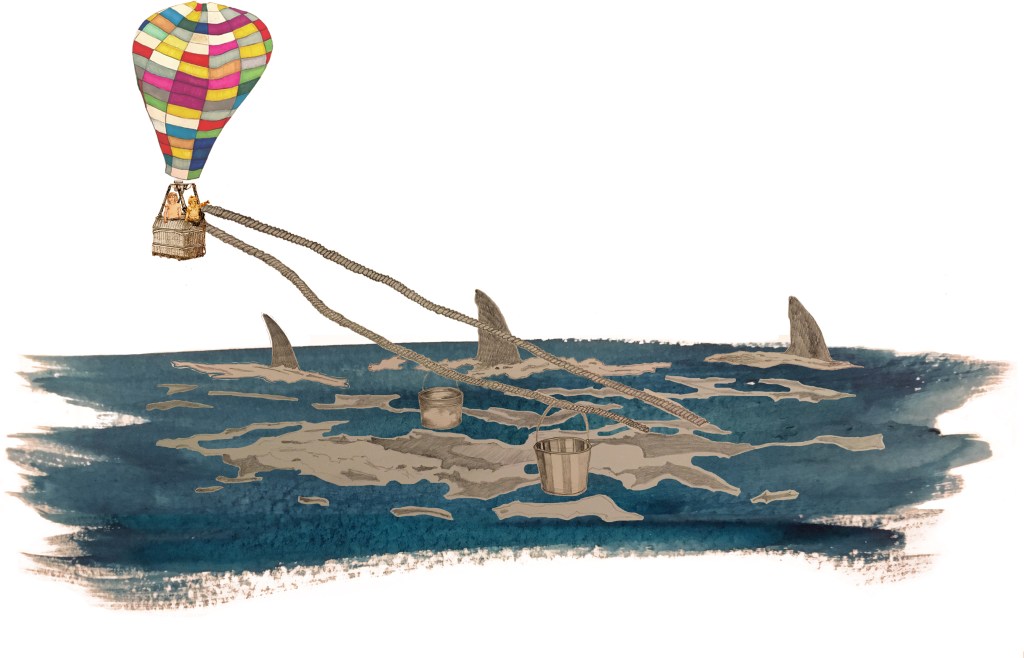
After I first left CNN, and especially after walking away from two other, simultaneous, media roles held for about a year afterward, I often found myself pondering my purpose and, heartbroken, hoping to feel confident some form of this could be renewed and restored.
Recently, and especially as the theme of senseless predation with regard to media companies has felt so much like the proverbial hurt healed only slightly, I’ve noticed that it has helped to ponder ways the topic can be addressed in other contexts and through prayer – a forum where I feel I can always be heard.
On Opportunity
For some reason, it has felt deeply right to me recently to pray for dolphins each time I see an alert from a conservation organization that monitors and records cetacean hunters in Japan that their boats are attempting to capture a pod. And, on several times this week, I loved feeling specifically good about praying in new ways each day.
First, the thought felt right in my heart to know that, once caught, a pursued community of dolphins could escape and then, when I saw the organization’s update, it read that, while, devastatingly, some who had been targeted and caught that day were slated to be held in captivity (I still believe they will be returned home), none were killed and the remainder were simply released.
For some reason, I do not seem to be able to find any record of my prayers the second day, but I believe I felt inspired to feel like, even if pursued, the dolphins’ speed and dexterity could enable them to evade capture.
On the third day, I felt most right about holding to the idea that any vulnerable dolphins were already caught in God’s net and that, even though it may feel uncomfortable or hard to understand, God could guide them to a good hiding spot for as long as needed. I am so grateful to have read no dolphins were found.
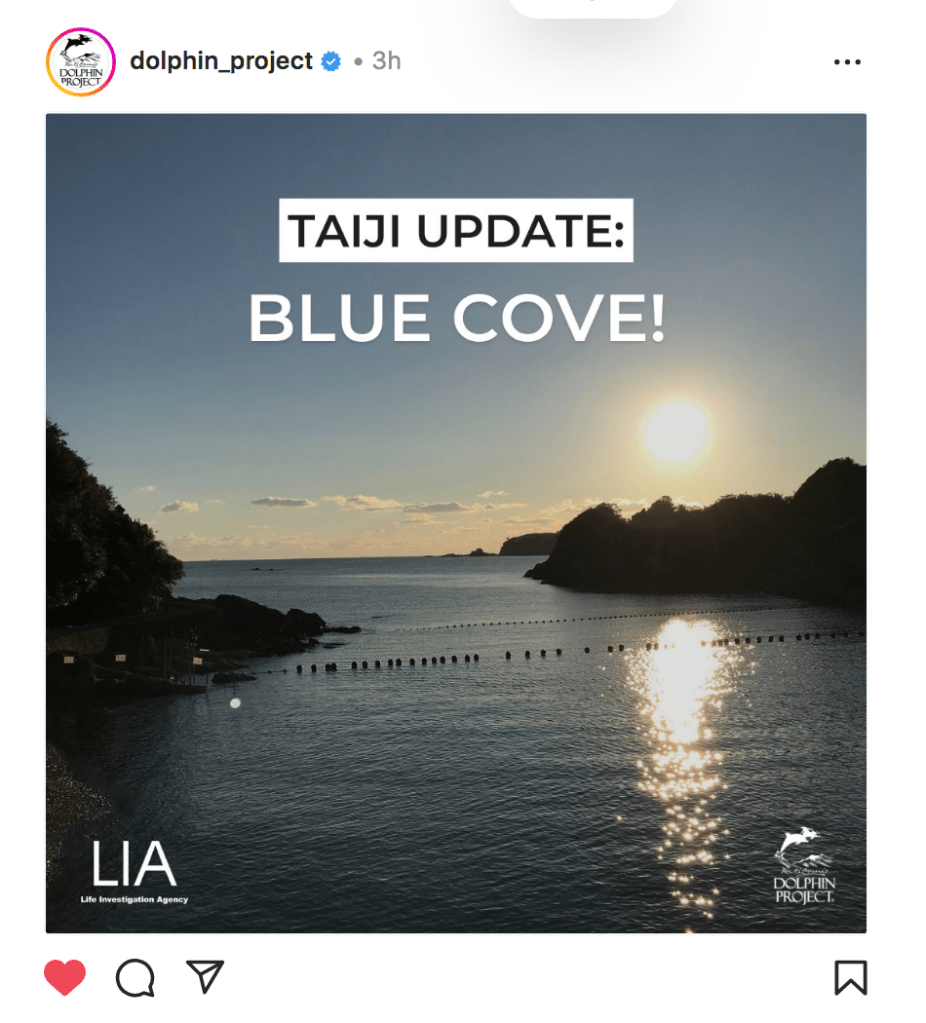
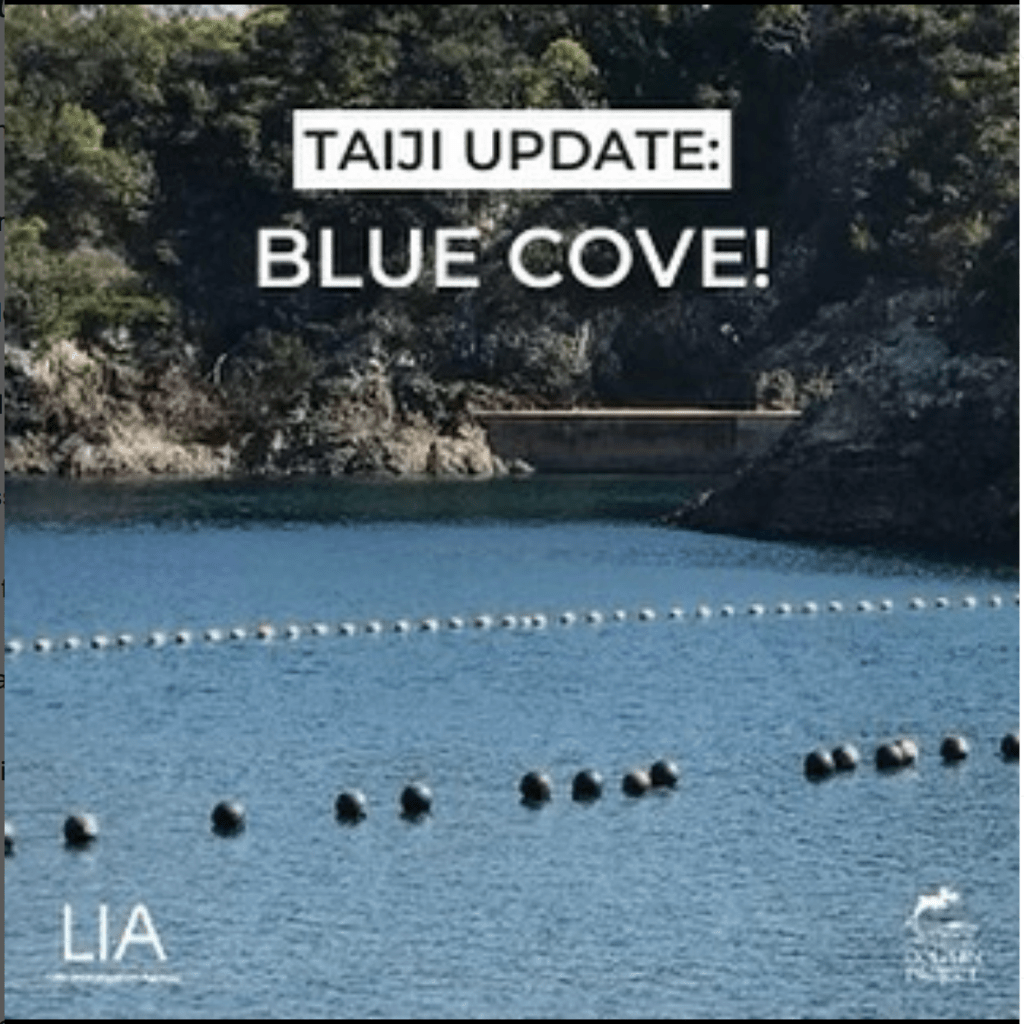
On the fourth day, when I turned to prayer a picture of a perimeter around the cove came very clearly to my mind, and I very gratefully acknowledged and focused on it, feeling assured that it would not be crossed, either by boats or dolphins.
On a walk earlier today, I felt suddenly like I should turn around and head back home, even though I had hardly started my hike. Because I doubted this, I hesitatingly continued on but, after finally turning around, I remembered again a feeling of urgency about returning and wondered why this might be. The dolphins, I realized instantly; and before getting back to my computer I immediately began praying about them, feeling clearly that their Creator knows the precise location of every dolphin and that this would be the case even if they need to scatter.
When I returned to my social media dashboard, I saw that there had been a request put out, just about when the thought had come to me to turn around, for positive thoughts for a precious pod of dolphins after they had been spotted and pursued by a group of hunters but that, an hour later, the hunters had given up and retreated, looking for a new opportunity. Seeing this, I resumed praying and, when I felt good again about looking at another update, there was a joyful confirmation that the hunters had left the water altogether. Thank God.
On Utility
I realize that it may seem absurd to think both about my career as a news producer and more recent opportunities I (and the whole world) have been given to pray about world events, but both feel to me like facets of my purpose.
To this day, and often, portions of what feels like my body and soul simultaneously ache with an intense shock, exasperation, and devastation at what felt like the amputation of a much-loved career so callously and so purposefully. Because I feel I have contributions to make, I still feel like my career mattered. And it matters.
Increasingly, I am glad to be learning that as I get better (and I have a very long way to go) at focusing on what I feel God is telling me to do, I again not only have important work to do, but a wonderful feeling of purpose and that, when the thought comes to pray about something, it is a good idea to do it right then.
On Views
I still believe corporate media business models – and, specifically, their integration with the stock market – are what both political parties are, without knowing it, actually attacking at least some of the time today when they seem to be hitting one another, not to mention the collective well-being of the country, the hardest.
But, what, I have often wondered, is the best way to address this?
I continue to feel such a responsibility to do so, perhaps because, given of my experience with CNN, it at least seems I have a lot more information than many and that my perspective is uniquely informed by this.
But those to whom it would seem most natural to appeal are already informed. Why do they seem to refuse to care about practically anything but buttressing their own dominance?
As I have written before, I do not believe cancel culture is the answer to abuse within media companies given what is arguably a poor fit between many of their business model designs and human nature. But neither is ignoring these experiences and the solutions put forward by those who have survived them.
To me it sometimes feels less like I am living in the United States of America than the United States of Viacom, where only men who’ve perpetrated sexual abuse are allowed to be citizens.
Even when reaching out to independent journalists like Ronan Farrow and Bari Weiss over the years, although I experienced wonderful responsiveness in the beginning, it felt like the moment each learned I had proposed solutions to problems posed by an arguably unreasonable hegemony corporate media organizations seem to hold over America, there was no one to listen.
But, while I strongly feel public debate regarding corporate journalism organizations’ relationship to the stock market is needed, I do not pretend to know that any possible alternative I have put forward is necessarily the right one.
It seems to me that an unwillingness even to discuss a need for new ways of funding journalism is, in itself, a symptom of a belief that America should no longer be any sort of democracy but governed, instead, by an oligarchy of former journalists.
On Camouflage
One major benefit of the Trump era was that the inhumane and inflammatory nature of an increasingly ratings-based, publicly-traded corporate media sector was exposed so clearly. Even if many of the organizations falling under this heading did bet that they could forever maximize profit by emphasizing sensational – rather than substantive – news coverage without altering history too drastically, they bet wrong; and none have been held accountable.
I still feel it is worth emphasizing that I do not believe media corporations, known for their brazen disregard for human rights in secret, have genuinely sought such immense power in order to advance civil rights but that they, finally, supported greater emphasis on these rights in order to maintain, and even amass more, power. Recognizing this is important as it helps make it possible to address the topics of civil rights and corporate media business model reform as distinct.
I still believe it needful to articulate that, as essential as addressing extant and serious forms of gender- and race-based discrimination in the United States is, while predation is not built into the American form of government as designed, it is arguably built into publicly-traded media corporations’ business models, and that it is not enough just to tell them this in order to stop the cause of many harmful misunderstandings dividing the country today, because they already know. They did it on purpose.
I was intrigued not long ago by an interview with Stephen Kotkin on Lex Fridman’s podcast, both for its insight, certainly, but also, with all due respect to both intellectuals, for several misunderstandings about media power.
In the talk, Kotkin observes movingly, and accurately, how well-suited and ready Volodymyr Zelenskiy, a television personality, was to lead his country in an information – and physical – war of aggression perpetrated by neighboring Russia. And he is right: “Ukraine before the war is run by a TV production company … there’s twenty guys or so running a country the size of Ukraine; and one’s a producer, and one’s like a makeup person, and one’s a video editor, and they’re fantastically talented people if your country is a TV production. So, before the war, Zelenskiy had, what, twenty five percent approval rating? And he couldn’t get much done, and it wasn’t working. He got elected with seventy-three percent, as you know, and then he was down to twe- … that’s a pretty big drop. And so you’re thinking, maybe having a major, large-sized forty million-plus population European country run by a TV production company is not the best choice. And then what do we see? We see President Zelenskiy decides to risk his life on behalf of his country, Ukraine. He decides to stay in the capital; he’s not gonna flee, he- they’re gonna stay and fight. And he could be killed, He can die. It’s a decision where he put his life on the line… I foresaw Ukrainian society being courageous and resistant, but I didn’t foresee a television production company being exactly what you want to run a country in a war.”
But the role of another form of media influence that is at least tangentially relevant seems to be getting overlooked entirely. There are, at least sometimes, problems associated with leadership by production companies as Kotkin himself acknowledges with regard to pre-war Ukraine but that, arguably, matter more in the corporate realm.
I remember, when I first started at CNN, being told that I could expect to see the best of the company when there was breaking news and the worst of it when there wasn’t. And this did prove to be true.
Kotkin added, in the interview, that “it’s a Western-dominated world; and the West, remember, is not a geographic concept, it is an institutional and values club. … “Western” is an institutional category where you have rule of law, and separation of powers,” but, given the special influence America’s bloc of publicly-traded journalism corporations have, not only on public opinion – both through the production and, especially, through the suppression of news – but over governments, can it be said that they typify this value of separate powers? Kotkin went on to assert that “if you can suppress political alternatives, you can fail at everything else, but you can survive as an authoritarian regime.”
There are times when it at least seems to me that, unchecked, entities that were designed to produce stories of war can, even inadvertently, produce war and that when these same entities, which normally specialize in producing stories about pandemics, attain greater levels of power than nation-states, again, even if they do not intend to do so, they seem to be capable of producing pandemics – be these of fear, acrimony, or sensuality.
Given the way that journalism corporations have blamed much of their own influence over elections onto Russia in recent years, sometimes it feels as though this adversary’s wrath is at least partly aimed at them and that it may be worth wondering whether these entities, though located in the West, fit definitions like Kotkin’s of so-called Westernness at all.
Kotkin goes on to declare a belief that, more broadly speaking, “the West is powerfully resented, powerfully envied and admired, simultaneously,” and that he believes the U.S.’ Federal Reserve to be the “most powerful … of any institution in the world.” But is this true? Or could it be that much of the resentment directed at the U.S. today is really aimed at its corporate media infrastructure and that it is this infrastructure that is really the most powerful of any institution in the world?
While I by no means believe that these organizations’ speciality in tragedy means all will be tempted to fall into some sort of arsonist-firefighter archetype, their reliance on ratings-based decision-making strategies with regard to programming matters and the belief that it doesn’t is arguably an error in danger of propagation at the international level.
In recent years, I have often heard pundits I respect, including Professor Kotkin, lament how the period immediately following 9/11 was an opportunity, characterized by international goodwill, missed by the United States; and, while there are obviously differences, I am beginning to feel as though, while the increased calm and maintenance of order the country is experiencing today is undoubtedly a good and even an essential thing, we are in danger of losing the opportunity the Trump administration presented to take a hard look, together as a country, at the ways in which our journalistic infrastructure is funded, and the impact this has not only on both personal and public life domestically, but abroad as well, as even foreign countries seem vulnerable to feeling cornered by its dominance.
I know that very few people are listening anymore to concerns about women’s safety at news organizations. But, given that I have confronted these, and because they have helped inform my perspective, I still wonder whether better attention paid to individual rights within news corporations could still be helpful in uplifting their overall effects on the world. That civil rights within and civil rights without news corporations can be acknowledged and upheld simultaneously is logical based on first principles thinking.
I read last week about a man who had evidently been held accountable for a relationship with an underling at a news corporation where I used to work.
I guess that means today’s a blue cove day at CNN, too. But I don’t know. (Does anyone?)
Update:
Back to what I am learning about prayer work. Since the (awful) dolphin hunting season in Taiji went on for another eight days, I thought I would keep on logging some of the inspirational thoughts I’ve felt most right about holding to as one person of so very many pondering solutions to these beautiful creatures’ plight.
On the sixth day, the thought that felt most right to consider was that the dolphins were, in an absolute sense, never in the water. While this did feel clear, for some reason, I continued to feel so uncomfortable that I got back on my knees over and again for several hours before wondering whether any update would come. I did not maintain a very calm state of thought and felt agitated and was heartbroken to learn the next day that, after a four-hour chase, throughout which the dolphins expressed untold endurance, twelve individuals were murdered.
Devastated by this, I thought I would feel inspired to change course and pray for the hunters but, while I certainly do hope for them to change to a less harmful, more fulfilling course, I loved feeling a sense instead of God’s hand gently pushing the dolphins out of harm’s way. It felt so important to remember to feel grateful to be able to pray as long as I was allowed and to keep emphasizing the importance of every step being taken gratefully and gently. I’m grateful even now knowing how many people were holding to the thought of a hope for progress, and it was such a relief to learn the next day that no dolphins were captured or killed.
On the eighth day, I felt inspired to consider dolphins who were far away from the hunters and could only get farther, but I had difficulty feeling peace about my prayer, and how late in the day I prayed, and, devastatingly, later learned five dolphins were captured; but none were murdered.
Even so, based on the fact that there had been no fatalities, I still felt the thought so palpably, I’m still so glad I and others prayed.
On day nine, I felt it natural to consider, not because I thought of the idea, but because it came to my thought, that the dolphins would feel a gentle but firm repulsion, like a reversed bathtub drain, from danger; but, again, I felt uneasy about my prayer and later learned eight individuals were killed and two taken captive in Taiji that day.
On the tenth day, I persisted and felt confident and grateful when the thought came to me that, like a flashlight pointing into and looking for darkness, the hunters could not find what they sought. Thank God, no dolphins were killed or captured.
On the eleventh day, several protesters held vigil in person in Taiji, and it felt so natural to recognize the real authority they were representing, not because they naturally possess any more legitimacy than their hunter counterparts, but because their activity felt so much more right. The hunters’ behavior having felt so lawless to me, it felt right to hold to the idea that the dolphins could not leave the zone of God’s governance; but thirteen whales, including two calves, were evidently hunted down and murdered.
On the last day of the season, it felt right to acknowledge the distinct value of every individual’s role, including my own as one of those praying over the situation, the boaters, who are capable, I believe, of seeing themselves as protectors, rather than hunters, and the dolphins themselves; and it felt calming to know that each of these were meant to be directed by God. While I am devastated to have seen much more graphic imagery earlier today than I have ever seen before of the revolting brutality of Taiji dolphin killings, I am grateful it is a blue cove day. It is also incredibly inspiring to see the brave and loving stand taken again today by protesters whose dedication and courage, I believe, will bear fruit.
 Recent Writing