
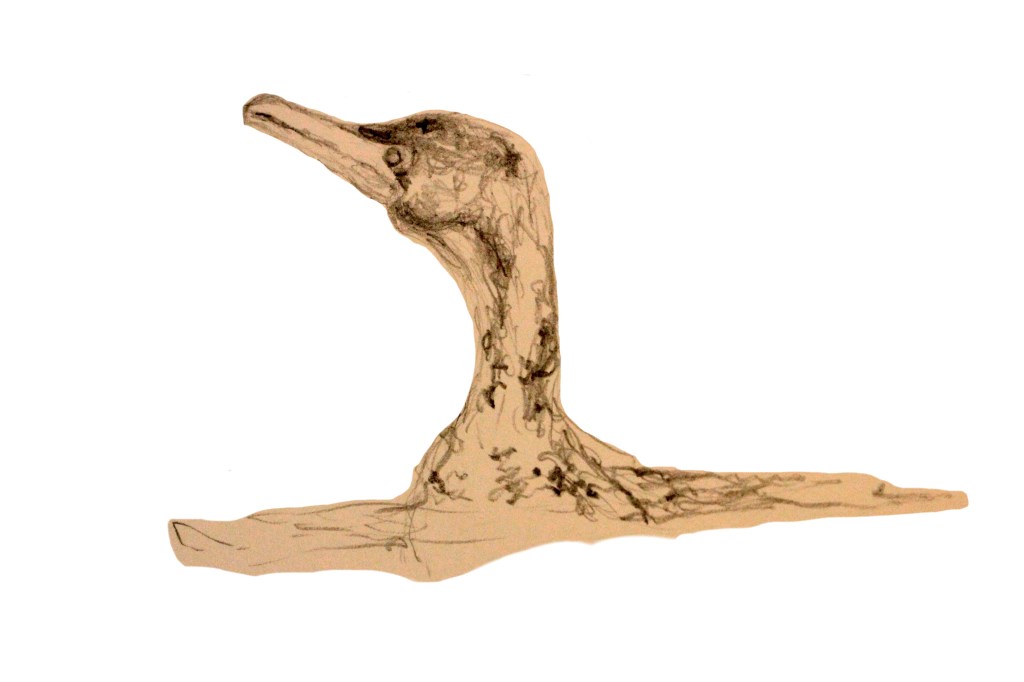
This weekend, I was struck by the calm expressed by a group of cormorants enjoying floating in a local river before jogging further to catch another glimpse of, I believe, the same statuesque heron who’d braved a considerable post-rain torrent at the bottom of an artificial waterfall the day before, looking ready for the return of calmer afternoons. I realize gorgeous herons are water birds, too, but it was striking to consider the distinctions between the two scenes and how unhelpful the presence of the dam appeared to be.
Both cormorants and herons, of course, are agile and mobile in air and water; but the contrast the sights still reminded me of the differences between qualities that seem to thrive within and outside of particular organizational environments. Given how much consideration I’ve given to the distinction between what I still believe could be termed “paper parks” – or, pockets within publicly-traded journalism corporations within which the maximization of ratings and profits seem to trump all other considerations, and other environments – I took pause at all the commotion today about yet another media organization, this time spearheaded by a politician, going public.
I have not personally proposed that social media organizations be disentangled from stock market forces, but I wonder whether this moment, as conflicts of interest inherent in the intersection of media and Wall Street are top of mind, could be a good opportunity for discussing ways in which these can be particularly acute in the journalism world, the intersection of journalism and Wall Street arguably constituting a sort of dam preventing the calm and free flow of helpful information and ideas among the American public.
No political candidate I know of has raised the issue and, yet, it could be one of the very most important ones to take up in ensuring we’re identifying, protecting, and stewarding environments within which the best our country has to offer (and that means the best in every one of us) can thrive.
 Recent Writing